Home Blog Page 12

The Brand Planner’s Conundrum.

0

The problem with brand planning consultants is that we are not very good at talking about ourselves.  And, unless you have a full-time job in planning, you need to be selling to be making. It’s a conundrum.

Some consultants are egocentric. Others wall flower-ish. And, of course, there are scads of variations in between. But one thing we share in common is the enjoyment resulting from digging in on other people’s brands. We love exploring.

I am most comfortable talking to people about what I do when sharing observations and insights about brand good-ats and customer care-abouts.  (At its most basic level, distilling care-abouts and good-ats is what brand strategists do.)  Though, put us in a room with marketers and ask us to talk about ourselves and it gets ugly.

Brand planning hither rather than thither is a problem. Especially for consultants. Don’t get me wrong, over time I’ve figured out a few sweet selling points. And I crafted a solid framework to deliver strategy. One that’s easy to understand. But that sausage-making is relatively boring. My cross to bear.

So repeat after me, thither rather than hither.

Peace.


Selling In 30 Seconds or Less.

0

I was in a meeting yesterday in which mentors were demonstrating techniques to help early-stage companies build sales and teams. The mentee company founder explained his software company as one that monitored employee workflows with the goal of smoothing them out and making things more efficient and productive. My words not his. His explanation was more cumbersome, acronym filled, and, as is the way with coders, rather technical.

One of the questions I use in my brand strategy practice came to mind for the three mentors during this exercise. It has really helped me over the years when interviewing technical people.  The question was born of work for Capgemini many moons ago. 

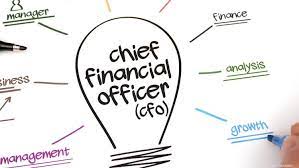
It was meant to be asked of salespeople but works for founders.  “If you had only 30 seconds with a CFO, what would you tell him/her about your product in order to get a meeting?  Craft the answer as if it were a cold voice mail.”   

If you have ever spoken with CFOs, you know a couple of things about them.  Numbers are their jam.  They’re revenue and expense driven.  They aren’t big students of the FM (fucking magic) or technology undergirding product management.  They also don’t take kindly to marketing bullshit. So, when crafting your 30 second speech, get the Is-Does right – what the product Is and What the product Does. Explain your key benefit — don’t benefit-shovel. And solve a problem with pent-up demand. You just may get your meeting.

Peace.


Innovation is a Gift.

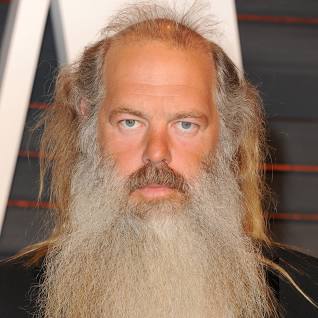
BEVERLY HILLS, CA – FEBRUARY 22: Music producer Rick Rubin attends the 2015 Vanity Fair Oscar Party hosted by Graydon Carter at Wallis Annenberg Center for the Performing Arts on February 22, 2015 in Beverly Hills, California. (Photo by Jon Kopaloff/FilmMagic)

One of the greatest living music producers is Rick Ruben.  His genius cuts across all music types: Rap, country, rock, jazz and some yet to be classified. It is his ear that sets him apart.  He hears things others don’t.

I’m not sure he has the same ear for people, however. In the Avett Brothers documentary May It Last, after a perfect and raw recording of one song, where the room was pin-drop silent, the singer completely drained, Rick’s excited voice bludgeoned the room encouraging everyone toward the next cut.  Both Avetts, awoken from their trance, asked for a minute – walking outside to the Blue Ridge mountains to gather their shit. To revive.

That said, it was the perfect cut and Rick’s fingerprints’ evident.

In an interview this week with Anderson Cooper on 60 Minutes, Mr. Ruben said “the audience comes last.” “The audience doesn’t know what it wants, it only knows what it’s heard.”  This approach is very Steve Jobsian. I also subscribe to this school of thinking, calling it Beyond the Dashboard Planning.

It’s certainly contrarian.  But Rick Ruben is contrarian.

In Rick’s interview he said about great music “It seems familiar. Yet you don’t know where you’ve heard it before.”

It’s a gift, innovation.


Brand. Strategy. Framework.

0

One of my favorite definitions of “brand” is “an empty vessel into which we pour meaning.”  It’s a statement about the malleability of brands. But under further scrutiny the definition isn’t 100% accurate — most brands aren’t really empty, are they?  Blaze Pizza has a special crust, sauce, cheese.  Fat Tire beer offers a unique malty taste profile. A Ford Mustang Mach-E is a line extension containing lots of built up and carry-over meaning. Nothing empty about that. And, of course, brand have names. Names which when done right, offer up a view into the product and, hopefully, convey a special value.

It is the job of the brand planner and brand manager to take what exists inside the vessel and enhance it. Refine it. Compliment and strengthen it.  It’s the brand strategy that lets creators and marketers develop and energize the bond between consumers and the brand. It all starts with the brand strategy.

My definition of brand strategy is “an organizing principle for product, experience and messaging.”  And to organize you need a framework. Mine is built upon claim and proof. My framework simplifies decision-making, adds direction to the creative process and informs all four Ps of marketing.

Get yourself a vessel. Get yourself a framework. And land on a brand strategy. Chaos be gone.

Peace.  


Smarten-up.

0

I’m not the smartest guy on the planet. Sometimes it takes me a beat to get a joke. I didn’t get As in college until my senior year.  I can’t finish the NY Times Sunday crossword puzzle (but I do help my wife finish it). This somewhat average acumen serves me well in my brand strategy practice.    

I can tell a story, I have an ear for consumer likes and language, and have good taste in styles – all assets that contribute to my business. So there’s that.

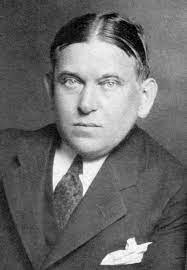
H.L Mencken once wrote:

“No one in this world, so far as I know — and I have searched the records for years, and employed agents to help me — has ever lost money by underestimating the intelligence of the great masses of the plain people. Nor has anyone ever lost public office thereby.”

You’ve heard the expression “dumb down?” Well, when crafting brand strategy for the masses, you don’t want to be the smartest person in the room. Brand planners who are off-the-charts smart sometimes overthink and overcomplicate brand strategy. Whether challenging themselves or making points with the client or creative team it hurts the work.  Conversely, other planners who get that 330 million Americans come in all shapes, sizes and aptitudes, work to “dumb down” brand strategy to a lowest common denominator.

I take issue with both these approaches.

The opposite if dumb down is smarten-up. In my planning rigor, I boil down brand strategy to one claim and three proof planks.  The claim may border on common but the proof planks are certainly the “textures of belief” that appeal to consumer smarts.   

So brand people, smarten-up your strategies. And H.L. Mencken be darned.

Peace.    


Startups and Pent-up Demand

0

Pent-up demand are my two favorite marketing words. I love brand planning on products and services for which there is great unmet demand. And when that demand is pent-up, I’m even more stoked.  Conversely, positioning products that consumers don’t know they need is a two stepper. Much more complicated. And much more expensive.  

I once worked at a social media startup that allowed website building without knowing code. We were funded to the gills. Quantitative research told us there was great demand for our tool, yet we flamed out in less than two years. One woman’s pend-up demand is another woman’s crash and burn. So let’s just say, all pent-up demand isn’t the same. 

There is a difference between pent-up demand in a mature category (lite beer) and that in an emerging category (web authoring). Savvy brand strategy has to account for that. Just as every mother thinks their baby is beautiful, every entrepreneur thinks their startup is beautiful.  Understanding demand, pent-up demand and the alternatives is a critical first step.

 Peace.


Brand Value Triad.

0

I was reading some material on a solar panel company recently and through reverse engineering discovered their brand values to be integrity, hard work and customer service. These are all great qualities… but horrible, undifferentiated brand values.  Also note, none of these values are endemic – physically tied to the product or service. As such, any service company could use this triad of values. It’s, therefore, meaningless. In fact, it’s harmful – burying one in a sea of sameness.

Pop Quiz.  Name a solar panel installer known for integrity, hard work and customer service. Name and financial planner known for integrity, hard work and customer service. See where I’m going with this?

I did a brand strategy for a service company in the commercial maintenance business. They clean commercial buildings, mow lawns and remove snow, among other things. Their brand strategy claim was “Navy seals of commercial maintenance” and their values (I call them proof planks) were “fast,” “fastidious” and “preemptive.” Now fast may not sound very differentiated, but when you balance that with fastidious and add the very unique preemptive, you have a value triad that kills. Are these values endemic to a cleaning business? Maybe not, you got me. But they are sure what customers care-about and what the commercial maintenance company is good at. Good-ats and care-abouts.

(When dealing with business-to-business service companies endemic is important but less important.)

Peace.


Finitie-osity.

0

Marketing and advertising would be much better if they focused solely on proof.  Proof of value. Demonstration of value. Honestly, you needn’t even be best-in-class, you just need to support your value claim.  But 90% of advertising today tells consumers what to believe but doesn’t show it.   

There was a time when you could sing your product’s praises and it sold. That was the era of “We’re here” advertising.  If you were simply top-of- mind, you won.  It’s a strategy Geico still employs. But ladies and gentlemen, we live in an era of analytics. Of measurement. Of Finite-osity.  There are ways to prove a claim. 

Analytics are the friend of proof. 

If you say you are the best-selling dishwasher detergent, there’s data to prove it.  If you say you are the hotdog eating champ of Brooklyn, there’s a contest. Most snow in Utah? NOAA measuring stick. But for some reason we still prefer to sing the praises of our products.

My job as a brand planner/brand strategist is to rid the business of this horrid and wasteful selling practice. My job is to organize product and service values into groups of proof which existentially (there’s that word again) reflect a product’s superiority.

Love to show you how it works and prove how it has worked for clients.

Write Steve@WhatsTheIdea.com

Peace.


Re-Massification.

0

On a recent assignment my client and I spent a good deal of time on the target. The What’s The Idea? brand brief refers to the target as follows:

Living, Breathing Target (Define the largest grouping of consumers, bound by a single shared attitude or belief, that will be most motivated to buy/consider the product? Provide a description of the target, not title or demographic.)

Peter Kim a long-ago mentor used to refer to the target as a large group of various targets, with many different buying motivations.  But he then suggested “re-massifying” them back into a single group, with one shared care-about. I loved the word re-massify. Out of many one kind of a thing. Peter’s knew this was how you built a brand – reach as many people as you can, with a hopefully compelling value proposition.  That said, when re-massifying the target, trying to find a single shared care-about, one can water down the principle value. It’s hard work.  (And sometimes, you just have to eject part of the target, so as to keep your key claim compelling.)

Well, on the recent assignment, my client added great value by not simply approving the presented LB Target, he pushed. And yes, we did lose some people when re-massifying. But it made for a more compelling brand brief and brand story. This additional targeting work made the creative process easier for the creative teams. An important result to be sure.

I’m convinced the target description is one of the most important parts of the brand brief. Even more so than the “Core Desire” which is a distillation of the LB Target’s most important need.

Get the Living Breathing Target right and most other pieces should more easily fall into place.

Peace.


Brand Strategy Proof Planks and Interdependence.

0

I studied Anthropology in college.  Cultural anthropology – the fieldwork, the unfettered observation of people and cultures has helped my brand strategy practice.  But so has physical anthropology, the study of the adaptation to change by living things.  You know, the ascent of man stuff.

In his Op-Ed column this morning, Thomas Friedman talked of climate change and how it is not the strongest or smartest species that survives climate change (dinosaurs, for instance), rather it is the most diverse,  “…the most adaptive ecosystems are usually the most diverse, offering different ways to adapt. They thrive because they’re able to forge health interdependencies among the different plants and animals, and in doing so, maximize their resilience and growth.

Brand strategies, too, must offer a diverse and interdependent way forward. The secret to my framework is three proof planks. Taken together these planks create the business-winning proposition. Individually they are ads — or floating claims in a kelp bed of marketing. Brand strategy is a long-term game. Sometimes the 3 proof planks can be at odds. One may diminish the other. But life is messy and branding can be too. Yet taken together, in support of one claim, three well-thought-out brand planks provide a healthy interdependence that can last the tests of time. And the test of change.

Peace.

PS. For examples of how planks can be at odds and yet work together write Steve@whatstheidea.com