Home Blog Page 35

The 3 Ps…Levels of Brand Strategy.
0

First and foremost in brand strategy is the Promise.  I have also called it the claim.  I prefer claim because you can willfully break a promise, whereas a claim is a claim  not made to be broken. But let’s use Promise as it’s a nice branding word, both warm and fuzzy. A promise is bound by an objective. The right promise in branding is tied to a business winning value – and that value is either a brand good-at or customer care-about. Ideally, both. Coca-Cola’s brand promise is refreshment. Something the brand is good at and customers care about.

Proof, the second P, is something I write and talk about all the time. It is the evidence of the claim. Proof that a restaurant is good is a Michelin Star or a James Beard Award for the chef. Proof is what consumers tell other consumers to get them to believe recommendations. Proof organized into three planks is how you create memorable brand values and memorable brands.

And lastly, there is Persuasion. Persuasive delivery of the promise and proof is an accelerator to brand building. Often, this takes the shape of creative. Brilliant brand-building creative delivers the promise, with proof, in a emotional and rational envelope that sticks to the ribs and brain. Persuasion leads to action. There can be persuasive creative that doesn’t deliver promise or proof yet that is just advertising art. Good for the agency, bad for the business.  

Use all 3 Ps in your brand strategy and it will be hard to fail. This, of course, providing you have a good product. Someone once said the fastest way to kill a bad product is with good advertising. The fastest way to make good advertising is with the 3 Ps.

Peace. Or is that Ps.



Education or Decoration?

0

I’m a firm believer that the best marketing is based on education. This goes for branding. Give people information that stimulates and is new to them and they will retain it. Of course, that information must be about brand value, brand function, brand discernment and personal utility. Not necessarily all at the same time. Hee hee. As a smart branding mentor once said, make deposits in the brand bank.

I am not a firm believer that the best marketing is based on decorating. Decorating attempts to gather attention through beauty or other creative means and build off that attention with an often hidden and or/shoehorned sales message about the product. Attention is important, don’t get me wrong. If you are not being scene and referred, you are not likely to be considered and purchased. But you don’t want to be all hair gel and no hair.

The best approach to marketing is not to decorate for attention, then sell as an afterthought. The best approach is to establish a brand strategy, which you only need to do this once, then use your marketing budget to educate your way to preference.  Sadly, I’d estimate 80% of marketing and advertising budgets are spent on decorating.

We need to flip that equation.

Peace.


Proof. And Its Successor.

0

Readers and clients know my brand framework revolves around “one claim and three proof planks.” To readers passing in the night and the those steeped in brand-speak and the many theories of brand planning, claim and proof may just be new flavors of the same old.  But to those who have actually been through the What’s The Idea? planning rigor, the notion of mining proofs is unique brandcraft. When president Trump says there’s election fraud, that’s a claim. When he actually trots out proof of fraud we (will) take notice.  When a bank says it offers the best customer service, that’s a claim. When they take 15 minutes to pull up your computer records that’s the opposite of proof.

But when talking about brand planning and brand strategy, claim and proof aren’t always the catalysts that cause people to buy. It’s inside baseball. It’s fill-in-the-blank stuff. Generic inputs. Only when they see actual proofs from their own company does it make sense. Does it become salient.

I’ve landed on a new rubric for selling brand strategy that is aligned with proofs but uses a notion which is much more easily understood. It revolves around a word more obvious in its ties to selling: Persuasion. Rather than call the selling keystones of brand strategy proofs, I will begin calling them persuasions. Proof out of context is generic science. Persuasion, as a word, stands on its own.

Stay tuned for more discussions of the framework around persuasions. It’s going to be fun!

Peace.


Marketing Background, Need Not Apply.

0

I don’t come from a traditional marketing background, not that there’s anything wrong with that.  Some very important learning took place for me while at McCann-Erickson back in the 90s.  A number of account supervisors from around the country were treated to a few days in Miami at a fine hotel where we were trained in marketing. A text book was provided, teams and competitions established, and we were introduced to a number of MBA-like concepts the likes of which typical ad people weren’t privy.  It helped us understand that product marketing and product management people weren’t put on this earth to approve ads. They had other jobs. Price elasticity anyone?

But I digress. I don’t come from a marketing background, which for some is a generic business title. To some it means you make marketing materials. To others it means you get in the way of the sales people. It can mean you manage the promotion budget.  But it is often a generic work title.  That’s not me. When brand planning, when developing brand strategy (one claim, three proof planks), I am someone who works in your line of business. You, being the client.  I’m in specialty pharmaceuticals, children’s character underwear, cybersecurity to name a few. That’s my job. Your job.

Only when I understand your line of business, your customers, your competitors and sales processes can I do my job.  Brand planning is not about background, it’s about foreground.

Peace.


Anthropology and Brand Planning.

0

Cultural anthro-pology is something I learned to love at Rollins College. Margaret Mead was a superhero of mine. Watching people, understanding their behaviors from a functional and symbolic standpoint and recording patterns is not easy. But it can be dull.  Hee hee. This college line of study helps me quite a bit in my current brand planning practice.

When working with retailers with multiple SKUs (products), it’s not unusual for a client to try to wants to sell one piece more than another. Usually it has to do with higher margins. Sometimes it’s ease of production — as in, it used less materials, energy, manpower. Passion and ego also come into play. It’s important to know these things. But what is even more important to know is what “customers want to buy.”

I call this pent-up demand or simply demand.

The anthropologist in me says to study consumer desires and needs. Why they desire and/or need the product? How they manifest that desire? What role it fulfills in their lives, both functionally and symbolically.

Marketers may like to sell product A but if consumers want to buy product B the marketer needs to readjust. Once the marketer understands the purchasing motivation, s/he can choose to evolve product A or back-burner it in favor of B.

This is brand work. This is behavioral work. This is removing one’s self from the marketing equation…one of the first lessons of anthropological study.

Peace.


Are KPIs a Brand Tool?

0

KPIs (key performance indicators) came into active use in the 90s, though codifying business objectives has been around since the 1800s. In an interview by Ana Anjelic of two founders of South Fork Pottery here in Asheville I noticed a reference to establishing KPIs for each department. Measurement dashboards are au courant. But that means lots of KPIs. How many KPIs is too many I wonder.

Jeff Finkle a smart VC and finance dude came up with a wonderful performance objective a number of years ago I have used with clients for years. It’s a key branding objective really and it is tied solely to the brand claim.

Every day, at the end of work, as each employee is walking to their car, that person should ask themself “What did I do today to (insert brand claim here)?” If they did nothing to advance the brand claim, it wasn’t a great day. It was a day they could have been more productive.

Sharing the company or product brand claim with every employee is free. Reminding them they are there to advance the claim is free. Creating incentives and culture around a brand claim is business-winning. It puts the entire company into the marketing effort.

KPIs are for spreadsheet and dashboards. Brand claims are for the people…and the bank.    

Peace.


Do It Yourself Marketing.

0

I was reading this morning about the growth of the DIY (Do It Yourself) culture in the face of the Covid pandemic. Did you know the price of retail wood has tripled in the U.S. because people are renovating their own homes. In the UK, 50% more businesses started up in June 2020 than in June of 2019.  And on and on…

YouTube is answering the call with a new TV campaign celebrating all the people searching its site using the words “How to?” Doing it yourself, win or lose, is very fulfilling — whether replacing a bathroom light switch or porch stairs. Both How-Tos are available on YouTube.

I’ve come across a number of young entrepreneurs who are DIYers when it comes to marketing. Many believe with a little research they can cobble together a free website. Build a list of search terms and run Good AdWords. Create a logo using design templates. And set up a marketing engine to support their good business idea. All for a few hundred dollars.

But marketing is not an undertaking for the weekend warrior or the Covid free-timer. Unless they begin with a strategy. A brand strategy, more specifically. As an “organizing principle for product, experience and messaging” it undergirds each and every tactic of marketing. Tactics sans strategy are an Excel flowchart and nothing more.

If you are a DIYer getting ready to launch a business, set your brand up to succeed; get the strategy right before you start doing.

Peace.     


Brand Strategy Trifecta.

0

There are many things to love about being a brand strategist. But if pushed to highlight best, I’d have to say it is the learning.  Learning the product, the category and the consuming behaviors of the market. 

I start many meetings with customers and prospects explaining I’m a simple man.  I strive for simple solutions that are easily understood. Complexity is what ruins most branding efforts.  Complexity supports multiple values. Complexity makes it harder to create order. Complexity makes it harder for decision-makers to lock down on order. Simple order is what consumers crave when making brand decisions.

What I like to think I’m good at is creating compelling order. Prioritizing customer care-abouts and brand good-ats into three reasons-to-buy is part of my framework. But finding those 3 reasons or values that are most compelling is the secret sauce.

I love learning and creating compelling order. The things are inextricably tied. Learning by itself doesn’t work. Creating Order by itself doesn’t work. Compelling by itself doesn’t work. The trifecta is built upon all three.

Peace.


More Science in Branding.

0

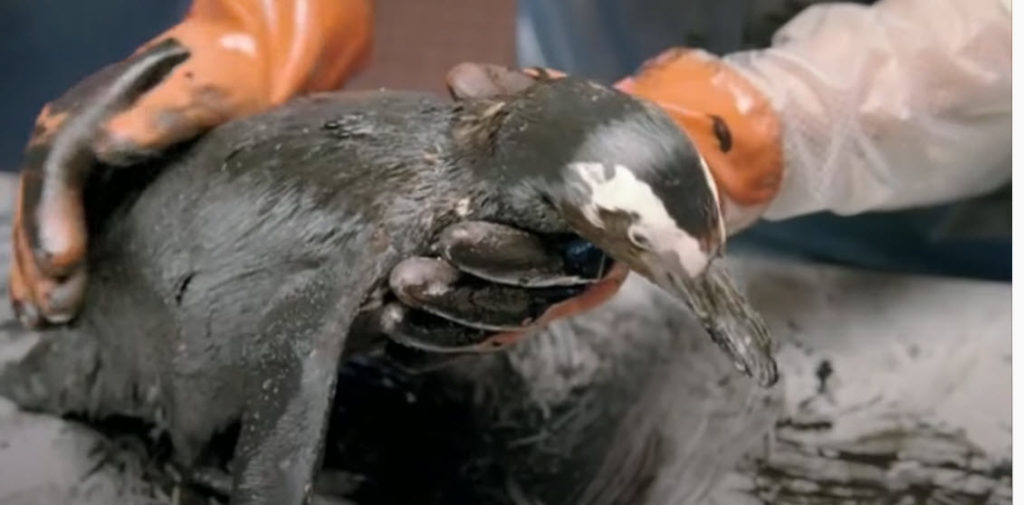
Yesterday I wrote about a famous ad campaign for Dawn Dishwasher Detergent and its use degreasing ducks following oil spills.  I mentioned that the key ingredient in Dawn, the one that cuts the grease, is a surfactant. (When a kid in the ad business I did advertising for Union Carbide Corporation surfactants.)

As a brand consultant that touts proof in its strategy framework, you can expect I would lock on to surfactants as the proof of grease cutting. A surfactant being defined by Wikipedia as: “Compounds that lower the surface tension between two liquids, between a gas and a liquid, or between a liquid and a solid.” But the fact is, in the Dawn commercials there was no mention of surfactants. Likely, there were not even scrubbing bubbles diagrams or animations about surface tensions being broken down. Someone decided to remove the science from the spots. Just greasy ducklings then clean, happy ducklings for our viewing pleasure.

As smart and creative as those spots were, there was a missed opportunity to educate the dishwashing public about the solution (pun intended). When someone asks why Dawn degreases better than other competitors, a reason why is always a good thing to convey.

Science is the new black. And it will only continue to get stronger…ahem.

Peace.


Strategy Must Be Interesting.

0

The foundation of What’s The Idea?, the eponymous brand consultancy attached to this blog is strategy.  It is about a particular framework that organizes product, experience and messaging.  Brand strategy is binary. You are either off or on.

The fuel for brand strategy here at What’s The Idea? is “proof.” Or evidence. Proof is tangible. It builds conviction. If I say my cleaning liquid cuts grease better than competitors I need to explain what a surfactant is. And how it works. That’s what Dawn Dishwasher Detergent has done so well. For me, the duck befouled by an oil spill, cleaned by Dawn, was the perfect demonstration of proof.

But here’s thing. Proof and evidence by themselves are great in a science project. But they are not necessarily compelling theater.  That’s why the creative side of the business is so, so important. It’s why we need writers and designers. It’s why we need smart creative directors. Strategy must be interesting or it lies fallow.

To build your brand properly, you need a motivating strategy then you need to land that strategy with brilliant, on-piste creative. It’s a time-tested formula.

Peace.