Home Blog Page 8

All Promise, No Proof.

0

Northwell Health of NY is a brand on which I cut my planning teeth. My work for Northwell began sometime after the year 2,000. The brand strategy developed back then still stands, even though many of the agency players have changed. When I started planning, Northwell, a system of hospitals, described itself as “a loose federation of hospitals.” Today, they are a tight knit juggernaut.

This week I saw a new :30 spot for the system under the new tagline Raise Health. It was posted on the LinkedIn account of CEO Michael Dowling, a superb leader and administrator.  He (or the proxy who posts to his LinkedIn account) lauded the ad. The strategy behind it is collaborative medicine…but the ad does not deliver. Visually maybe, but not in the copy.

The key copy point is “More experts, with deeper insights, getting to more breakthroughs.” This ladies and gentlemen is a claim. Three claims actually. And it’s an example of poor ad craft. Ads need proof. Scientific reasons to believe. This ad has none. Except for the promise that Tanya (patient) is better.  

Let me first say I learned a lot about branding by studying Northwell. This organization built its reputation on science. On maximizing protocols, sharing up and down its hospital network and constantly measuring data.  But that’s not what this ad does. It falls into the copy trap of all promise no proof. Even the words “more experts” is hollow.

Now, I did click through and found a story behind the Tanya case. I didn’t read the story. Most people won’t. Millions will see the ad though. And it’s nice film, nice words, but no proof. Nothing to remember.

Northwell Health and all its hard-working docs and professionals deserve better. Northwell is a system of hospitals.

Peace.


Proof Or Truth.

0

At McCann-Erickson, a huge and venerable global ad agency, the tagline is Truth Well Told.  Lots of agencies make up taglines — more like ad lines — but few have them for their own brands. Truth Well Told is one of the better ones.  Back when invented, the McCann shop stewards understood advertising would be rife with untruths and near truths.  The word truth is bandied about a good deal by planners (strategists) today. I’ll let you decide what the word means along with it nuances but, certainly, there is nothing wrong with hanging you marketing laundry on a truth.

At What’s The Idea? we are in the brand strategy business. Not the ad business.  In this world one must convince consumers a brand is better. Songs are nice, so are pretty pictures. Funny is good too. But to convince a consumer your product is better you have to prove it. It’s not good enough to just say it.  This is where advertising and much brand strategy falls short. Planners’ day jobs are to dig for insights. Insights that make marketing communications more personally motivating and unique.  But those insights, which may be truths, aren’t always proofs. They may be stimulating for creative teams, yet might not create muscle memory around a brand position. That’s the job of proof.

I often tell clients brand strategy is about finding that business-winning claim then proving it every day. That’s the job of the planner, the brand manager, the marketer and the ad agencies.

There are a lot of truths out there in the world. But not all truths, which may or may not capture the attention of consumers, will sell your product. That’s the job of proof.  If you would like examples of how proof and proof planks are organized into real brand strategies, write Steve@WhatsTheIdea.com

Peace.


Clicks Don’t Make the Baby.

0

Branding is a long-term pursuit. It’s not testing. It involves a great deal of planning. I presented a brand strategy, in the form of a long brief to an agency and they giggled that the original date was the year before. It embarrassed me a little. Then I waited for the work to get done. The creative work that is.  Hmmm.  I’m not sure the campaign has fully launched and it is one year out at least.  

Many people in marketing don’t have the stomach for long-term. They want their “tuna fish sandwich in their mouth now,” as my young daughter once indignantly told me while repeatedly being told lunch is coming, lunch is coming. And the web has not made this need for immediate return less important. Clicks and same day results are the marketing measure of the day.

A Ukrainian solder quoted in the paper today “water cuts through stone, and we’ll do it bit by bit.” That’s branding.  But it only works if you have a tight brand strategy. One comprising key customer care-abouts and vibrant brand good-ats. All wrapped in a brand claim that sings in the ear of customers and prospects.  That take planning. and the execution takes time.

Clicks don’t make the baby, genetics do.

Peace.


Swimming With the Tide.

0

When meeting with a new client, one should not jump right into the water and evaluate pricing, distribution and promotion — not without first understanding the product. If you begin with the first three components of marketing without fully understanding he product/service, you’re likely to observe, form insights and think about suggestions based upon “generic” category understandings.

Generic category information is what consumers default to, it’s what they believe about your product if they don’t know you.  You are simply a product swimming in the tide of public opinion.

It is imperative, I repeat, it is imperative, to fully understand the product before forming any sort of suggestion about marketing.  It’s a strategy first, tactics last approach.  

Brand strategy is about differentiation. It’s about positioning around heightened value. It is about proving that value with every breath. With every dollar. Mic drop.

Swimming with the marketing tide does not make you Tide. It makes you menhaden.  (How’s that for a mixed metaphor?)

Peace.


.

Too Much To Chew.

0

Elon (Do I need to write his last name?) is definitely a smart dude. Politics aside, he may really transform Twitter in a positive way.  But I have a couple of bones to pick with his efforts over the last few days.  One, the rename.  X is not ownable.  It’s not language-friendly.  It’s a letter, not a word. Or name. The second issue I have is the so-called positioning: the everything app. When you are everything, you are really nothing. Been there, done that with a start-up called Zude.

Maybe you can become the everything app — you just can’t position around it.  Let the people make that distinction.  The iPhone was the everything device but it wasn’t positioned as such. Or named as such. That was some serious restraint in branding.

I love Twitter. To borrow a quote from Thomas Friedman, Twitter (or X) makes the world flat. But it is a communication device, with amazing search aptitude. If it becomes payment app, fine. But this?…

“X is the future state of unlimited interactivity – centered in audio, video, messaging, payments/banking – creating a global marketplace for ideas, goods, services, and opportunities,” Linda Yaccarino, X CEO

It’s a chaotic position. Tech companies and tech entrepreneurs often bite off too much.  This is another case. And you can X me on that.

Peace.


Strategy or Brand Strategy. Hmmm.

When I’m on a roll – and it’s not often, thanks to PCMS (Post Covid Malaise Syndrome), everything I see and read in the news is viewed through a strategic lens. It’s, as the kids would say, strategy fire. Today, for instance, it started with a glance about  a NYT piece on the speed with which Nokian Tyre’s changed manufacturing strategy.  With climate change, geopolitical results-driven planning and change. And they realize quick change is better than sluggish change. The new environment is the catalyst of this change, but strategy the driver.

Notice I didn’t use the word brand one time in that paragraph.

The brandscape was kind enough to teach me my craft yet the word “brand” diminishes what I do for a living. When I position around brand, it sounds cool, trendy and au courant, but it’s not a wining communications value. No one wakes up in the morning thinks brand strategy is the business answer.

When I think about it I am really a strategist.  I find business-winning values, actions, tasks (read: strategies) that add money to the top line and bottom line. My work doesn’t feed the ad agency. It feeds the business and everyone in it.  Which then feeds the consumer.

When Nokia Tyre decided to open a manufacturing plant in Hungary because of the war in Ukraine, they weren’t, per se, using a strategic road map or what I like to call “an organizing principle for product, experience and messaging.” They were looking purely at supply chain, cost of business, security, ROI timetable and investment strategy. They were blocking and tackling.  Had they an organizing principle of values to drive all decisions, before they met to solve the many layered challenges, their “time-to-solve” would have been faster and more organized. And, honestly, it was quite fast to begin with.

Strategy would have sped up the process.

For examples of how my strategy based upon proof has worked for other companies, write Steve at WhatsTheIdea.

Peace.


ESG and Brand Strategy.

0

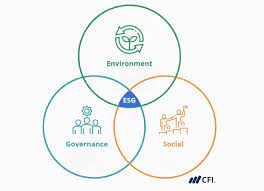
Environment, Social, and Governance (ESG) values are smart pathways for successful contemporary businesses. They are NOT, in my opinion, values belonging in a brand strategy. Not as such. Perhaps tangentially, as in a brand value may give you credit for being an environmentally friendly company, but not explicitly. Being ESG focused is the price of entry today. In brand work you want your values to be more endemic.  Built on customer care-abouts and brand good-ats. Not values universal to other companies. So, as “fresh ingredients” are important to a Thai restaurant, they are also important to a French restaurant. Not a good brand value.  And, the fact that they hire LGBT+ people, though important and critical to the culture and even food, it’s better to dig more deeply into the food and people for values. There is always something there – something unique to your brand.

So to recap, ESG good for business, not brand building. Not today. Being different is the key to branding. Being the same is the key to manufacturing.

Peace.


I’m Still Cormac-in’.

0

“I’ve been a full-time professional writer for 28 years and I’ve never received a royalty check. That, I’ll betcha, is a record.” Cormac McCarthy, 1987

If you don’t know Cormac you don’t know Jack (Casady).  Cormac is a great American author who toiled mightily until he won a Pulitzer in literature. He didn’t make any money doing what he loved until later in life — something I can appreciate. Not that I haven’t made any money as a brand planner, but I really haven’t cashed in on this blogging thing. Well over 3000 brand strategy blog posts later and I can actually attribute a couple hundred dollars, 3 dinners and a massage to my blog.  All from the same engagement.

As with Cormac, I keep typing. I keep sharing. And I keep creating.  Not sure a Pulitzer is in my future, but maybe an Effie or a 4As Account Planning Award.

If you do what you love, you win. I love brand strategy. And as Cormac might have said “I ain’t dead yet.”

Peace be upon you.

PS. Welcome to the world Ruby.


Benefit Shoveling.

What do you do?

It’s a question that bounces back and forth at cocktail parties, breweries and work events.  There are a couple of ways to answer: a short form, couple-of-word answer, or go in-depth. In branding, I always encourage the former. Hit them with the Is-Does. What a brand product Is and what it does.

Brands communicators don’t always follow this advice.  They think they need to sell and explain by the pound or by the word. It can leave audiences confused and/or fatigued. Good creative directors know this. They tell a simple story with a beginning, middle and end. A so-called narrative. Problem is, that narrative isn’t often based upon brand strategy.  (Post for another time.)

So back to simple. Was it Benjamin Franklin who said (I paraphrase)  “If I had more time, I would have written a shorter letter?” 

Marketing is made simple through brand strategy.  It’s objective driven. It provides proof of value. It’s measurable. And it leaves consumers with a gravity or gravitas constructed on care-abouts and good-ats.  It is the oppo of benefit shoveling, a meme I like to share which is the bane of marketers worldwide.

Brand strategy, it’s what’s for dinner.

Peace  


Influencers and SMEs.

0

I ran across a LinkedIn post yesterday, the topic of which was Creatorpreneurs — defined as content creators who make money. I’ve been around the web for many years working with AT&T data services during the Pleistocene so I’ve seen some evolution and trends. As an ad person working in telecommunications, getting smarter in technology required asking a lot of questions, reading a lot of literature and following smart people (SMEs- subject matter experts.)  In the early days that meant face-to-face and phone communications and reading a lot of trade magazines. But seeking out, following and communicating with smart people was how it was done.

With the advent of social media SMEs have given way to Influencers. Influencers may be pretty. Handsome. Funny. They may simply have access to SMEs. Or they may be good writers or video editors. They give advice. Sometimes shallow and paid-for advice. It’s a living. Creatorpreneurs.

Well, it’s gotten out of hand and some recent research backs me up.  When a person’s qualifications to advise is not based on their knowledge but the number of their followers we are getting off-piste. Learning from the web can be great (Khan Academy) but it can also be silly (bad AI).  The world needs more sharing from SMEs, less sharing from Influencers. SMEs make the world go round. Influencers make the party go round.

In the business world get you some SME.

Peace.