Home Blog Page 14

One is the Loneliest Number. In Brand Strategy Frameworks.

0

Someone on Twitter or LinkedIn posted the question, “What are your favorite brand strategy frameworks?”  My answer was “It should be your own.”  In a perfect world, there should only be one framework.  But the world isn’t perfect. The fact that there are scads of frameworks shows why brand strategy is stuck in the mud.

I’m not going to explain my framework, though I can in one sentence.  It’s that simple.  But whatever you do don’t Google brand strategy framework.  A while ago I asked Kevin Perlmutter, a friend and one-time employee of Interbrand, who now runs brand strategy firm Limbic Brand Evolution, what the Interbrand strategy framework was.  A bit befuddled he suggested we Google “Interbrand Brand Strategy.”  Here was the result:
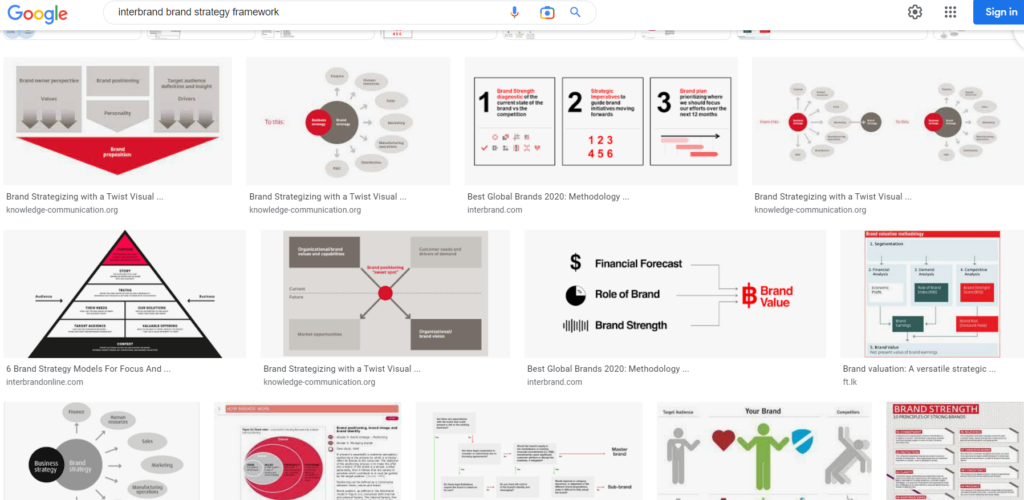


All these and pages more, from one company. A company at the top of the strategy pecking order.

Brand strategy as art may have multiple frameworks and approaches. Just as art does.  But brand strategy as science should have one framework. A replicable means of organizing product, experience and messaging. My company’s name is “What’s The Idea?”  In brand strategy there can only be one brand idea or claim.  It’s not What Are The ideas? It’s one idea.

Oh and one framework.

Peace.


Stake Your Claim. Your Brand Claim.

0

I used to think 3 proof planks was the way to go for my brand strategy framework. You know, the theory of three – three being, the number of things humans can readily remember.  It was a construct borrowed from the political arena. The more I read the political news though, the more I am beginning to think three is too many. With weeks to go before the elections, political platforms are rampant: Inflation, Migration and Crime.  Or, Abortion, Guns and Infrastructure.  Wait a month and the platforms will all be different.  Three is only good if they remain the same. And that is the discipline of the brand planner. Find the 3 key care-abouts and good-ats and stick with them. Through thick and thin. (Politicians don’t think that way.  They change platforms like underwear.)

Brand strategy at What’s The Idea? is “one claim and three proof planks.”  The claim binds the brand together. ZDNet is for doers not browsers.   Northwell Health is a systematized approach to improving healthcare. Sweet Loren’s is craft cookies au naturel.  These are strategies, not taglines.  Ad agencies can come up with their own campaign memes so long as they deliver the claim. But a claim without proof planks — immovable proof planks — is advertising. Or pell-mell, tactical marketing.

Research your consumers, boil down the key values, stake your claim, and build your brand through proof. Easy.

Peace.


J&J, Kenvue and the Jets.

0

I am a Jet Fan.  Where I come from (NY), this is understood to mean a football fan of the NY Jets.  In all other parts of the world, it means helical pieces of aluminum that cool an airplane motor.  See how important words are?  Which brings me to my real point, Johnson & Johnson is changing the brand name of its consumer products division to Kenvue.

Yes, Kenvue.

Johnson’s Baby Powder will now be called Kenvue Baby Powder or Johnson’s Baby Powder by Kenvue.

Apparently the pharmaceutical and devices part of the business is fast growing while the consumer products like Listerine and Tylenol are taking it on the chin from generics and store brands. Dilution of sales in the consumer brands is all the more reason to dial-up smart consumer brand strategy efforts. Doing the opposite is a recipe for failure. This move will accelerate revenue loss and hasten the death of this consumer products spin-off.

The pharma and device company, with much more targeted buyers, should get the new name not the other way around. I understand pharma medicine names are among the worst brand names in the hemi-verse, (Luboxi anyone?) but adding the Johnson & Johnson master brand will only help marginally. Make a clean break.

Here’s what I would do: Rename the consumer products J&J and use Johnson and Johnson (no ampersand) for pharma and devices. Simple. Maybe not approvable by the lawyers but at least it won’t blow up a perfectly brilliant consumer brand name.  

Oh, back to Jet fan.  Johnson & Johnson has nothing but great brand associations worldwide, unless you are a Jet fan.

Peace.


Learn to Earn.

0

In my lifetime I’ve been a parking lot attendant, dishwasher, busboy, waiter, house painter, mail room attendant, advertising account manager, marketing director and brand strategist but bever a salesman.  Not until a few years ago.  On my heels with few paid consulting assignments, I needed to put some cash points on the board so I took a job selling remodeled kitchens.  I told myself that for a person in the selling business, I had never really looked someone in the eye and sold belly-to-belly.  David Ogilvy, the godfather of advertising, would have chastised me for never strapping on a pair of salesman shoes.

Stationed at big box stores with a samples table, my job was to sign up customers for estimates.  And you know what?  I sucked at it. For a couple of months, I was at the very bottom of the company. When I finally stopped feeling sorry for myself, something clicked. I took it as a challenge — started diving for ground balls. I worked hard to connecting with customers and to entertain. People started listening. I started listening. And homeowners made appointments. I learned how to sell.

Shortly thereafter the company made me a trainer. I didn’t earn much, but I learned much. And that was David Ogilvy’s point.  You gotta sell to sell.

Peace.

PS. For a sample of best practices learned at this sales job, write Steve at WhatsTheIdea. Some pretty savvy stuff.


Develop a Brand Strategy and Cut Once.

0

Brand strategy is a unique undertaking.  It’s not many things, it’s one thing. Full stop.

When done correctly, brands have one strategy.  One “organizing principle for product, experience and messaging” that is sacrosanct. Inviolate.  At What’s The Idea? brand strategy is constructed using one brand claim and three proof (or support) planks. With this construct in place, every tactic thereafter is on strategy or off. It’s simple. Once the master brand strategy is done and done right, everything thereafter becomes additive and brand positive.  Everything thereafter becomes brand management. Not rethink.

At ad agencies today, departments of brand planners oversee project tactics. They enable creative team to do good work, providing them counsel on interpretations of the strategy.  It’s not necessary. Everyone in marketing is a strategist. Creatives. Project managers, Accountants. In their own little way.  With a brand strategy in hand all team members can officiate execution. No matter their function.

In carpentry, there’s a saying “measure twice cut once.”  Master brand strategy is the measure and tactics are the cutting.

Peace.


Explicit Vs. Implicit Brand Values.

0

I was listening to the radio the other day and a spot came on for a hospitality company. The copy ended with line “A place for all occasions.”  Since a key brand strategy application is messaging (AKA advertising) I couldn’t help myself from twinging. (It’s a curse, I know.)

A place for all occasions may be meaningful to the marketing or ownership team but it’s not to the radio listener. I can just imagine the client telling the writer,  “Our revenues are good in weddings, but we need more parties” or, “I’m making money on the weekends but need bookings during the week.”  To which the copywriter might have responded, “How about we close with a new tagline A place for all…”

Here’s the thing, marketers’ problems are not consumers’ problems. You can’t tell consumers what you want them to do. You have to tell them why — thereby encouraging them to want you. Solve their problems. As a consumer, I don’t want a hospitality location for all occasions, I want one for my occasion.

That’s why brand strategy planks are values. 

Heineken once found out people were drinking their beer more during the day than at night. More as a refreshment or lunch beer.  They didn’t come out and tell people to drink at night.  They celebrated the night life and let consumers make their own decision.  Heineken gets branding.

Great brand strategy is implicit rather than explicit. Get the care-abouts right, get the good-ats right, and you get the brand right.

Peace.


Mutations and Evolution.

0

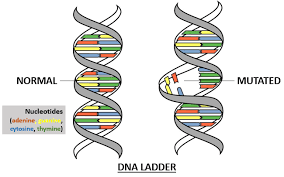
I’m a closet anthropologist and someone who likes to think about evolution. A professor at my alma mater Rollins College explained taught me one of the forces of evolution is gene mutation. Natural selection being another important force. Human evolution takes hundreds of thousands of years and even though my brand strategies are designed to be future-proof, they won’t stand up to that timeframe. Hee hee. So, we should always entertain the notion that brand strategies can evolve. To that end we must always keep an eye out for mutations. 

Our job as brand planners is to watch out for the signs. One way to do this is to constantly update and refresh the proof plank.  Keep a history or archive of your proof planks over time and then look back to see how they have changed. 

If the market changes in a way that one of your planks seems less of a care-about or good-at – or if that particular plank is lagging in activity — consider a new plank. Remember evolution is slow. And that can work in your favor. Just don’t assume everything stays the same forever.  

If you feel a new stronger brand plank coming on, test it. Do not add a new plank to the mix. It will only confuse your target.

Peace.


Be Ambitious With Your Brand Objectives.

0

At the end of my brand strategy presentations, I like to make sure the claim is well received.  I offer up slides listing all the pros and all the cons.  At present, I don’t ask C-level management and approvers how they feel the claim will perform against key product objectives. That needs to change.

Of course, understanding the KPI is critical to this step.

Much work in brand strategy work focuses on one overarching problem. I like to walk and chew gum.  What’s The Idea? brand strategies are intended to accomplish numerous things. All tied to top company objectives. Not just one.

A healthy discussion of how key objectives are met by the brand claim and brand planks proves the worth of the strategy.  Presentations meant to simply earn a go/no go decision are weak. Once the strategy is approved the hook has to be set. It has to show its business-winning nature.

I once worked on a huge healthcare brand and presented 15 plus objectives I believed the strategy could accomplish.  The client was nervous and made me pull back.  He didn’t want to his boss to think we were overly ambitious.  And he didn’t want to fail. Oh my!!

Peace.


Covid and Fieldwork.

0

I’m tired of pet peeves — how about a post on stuff I enjoy. I’m reading a book call Go Luck Yourself, by Andy Nairn. It’s a good read. If you like advertising and most brand strategy today is about advertising, it offers ups some neat stories about getting to good, effective work.  Advertising is nothing if it does not impact sales. And Mr. Nairn’s point is you can make luck and take advantage of luck, if you pay attention. It’s a fun read.

During Covid, I remained behind the keyboard and did much of my work remotely. That’s beginning to come to an end. I’m back on the beer and coffee circuit and it’s energizing. I met Frederic Terral, a brand planning like-mind and polymath, this week in Asheville and it pumped me up. Tangentially, I went to an archeology presentation last night on what lies Under Jerusalem and it, too, energized. I find insights and inspiration for brand strategy everywhere…I’m like fly paper for that shit. And listening to the speaker and author Andrew Lawler and a thoughtful Palestinian women commenting behind me, gave me jolts of inspiration. How will textured discussions about buildings, rocks, history, politics, religion and compassion inform what I do on my next assignment?  I can’t wait to find out.

It’s good to be back an in the field.

Peace.


Boiler Plate.

The older I get the more I post about pet peeves.  Hope I’m not getting cranky. Saw this piece of boiler plate used by a company that shall remain nameless. It’s a great example of burying the lead and lack of focus.  If you are Coca-Cola or Google you needn’t remind people of your Is-Does — what a brand Is and what a brand Does. But if you’re new or newish it’s pretty important.

Here’s the boiler plate:

Founded in 1998, So and So Company is a purpose-driven company that strives to empower the whole family, including pets, to live happier, healthier lives.

They believe that the products you put in your body, on your body and use in your home matter.  Popular product lines include premium pet food and supplements as well as clean health and beauty products for the consumer.

Okay, okay…if you get past the copy about being purpose-drive, you do get what they sell. Albeit, it’s a bit of an all-over-the-place portfolio.  Pet and people?  Products for in your body, on your body and in your home?  That covers some consumer ground. What tethers the products together is the all-natural claim, I guess. It doesn’t even say all-natural, I’m just assuming.

This company may be successful. In fact, they are growing.  But positioning, as Al Ries and Jack Trout proudly proclaimed, is everything. 

This boiler plate makes me cringe. In my brand evaluation tool “Brand Strategy Tarot Cards,” boiler plate is one of the first cards turned over.

Get it right so your consumers don’t have to work too hard.

Peace.