Home Blog Page 15

The Biggest Pity.

0

Nothing pisses off a creative person more than being told a client doesn’t “like their work.”  Nina DiSesa a big-time creative director or yore explained it to me this way “Ads are like our babies.” They are nurtured and coddled over time and can’t just be easily dismissed.

I’ve often spoken of the “like-ometer”, a fictional device clients use in approving ads. The notion of subjectivity in advertising or any creative pursuit, is real. And in the advertising business it’s super real.

That’s why top creatives like a good brand strategy. They are devising with a purpose in mind. They have a tight objective.  This helps them in development but also in getting approvals. There’s a basis for arguing for their work. It’s called a brand strategy.

When a person judging an ad doesn’t like a “color” or “negativity” or “the great outdoors,” the brand strategy can be employed. And the like-ometer shut down. 

We can’t get to better work without a strategy — the launch pad for all marketing and communications. Most professional ads are developed using a brief.  Few are developed using a brand brief.

That is the biggest pity of the craft.

Peace.


Cheerleading

0

I must admit to being a cheerlead for my brands. That’s not to say all brands are worthy, some will actually be clunkers. When that’s the case all you can do as a cheerleader is convey to management the changes that need to be made in order to make them good brands.  Those changes can be in the form of product or product experience. If the brand is underdelivering what consumers “care-about” or what it’s “good-at,” then you can always share with management benchmarks of better competitive products. Cheerleading for quality.  Hopefully management will see your category interest and positiveness not as a slight but as caring and industry insight.

But let’s assume your product is good. Being a cheerleader and living in the land of milk and honey is a good thing when establishing positioning and brand strategy. Positives beget positives. They give people enjoyment. When you are a cheerleader and constantly praise and mine brand values, if something negative does come about management is more apt to seek out your perspective.

Brand planning is a positive pursuit. High school cheerleaders are taught to smile. Even when the score is lopsided. Look for the good in your brand and celebrate it.

It makes everyone’s job easier.

Peace.      


Naming Brands Is Hard.

0

Sorry to go all pet peeve on you again but while driving on the interstate the other day I passed a large white truck with the name IPX Logistics on the side.  I scratched my head and wondered what they were delivering. Logistics? Hee hee. Trucking companies now often use the word logistics in their branding — especially for smaller companies.  It’s a mistake. As a fan and founder of the Is-Does Club, I like explaining what a brand Is and Does in the name. 

Logistics are an important part of transport no doubt. Proper planning can save time and money.  However, that only helps if people can find you and know what your company does for a living. If looking to transport stuff a long distance I’m not Googling “Logistics near me.”  I’d almost rather use your surname in your brand. At least it shows a sense of fealty and personalization.

Brands aren’t something you build randomly. Obviously, it starts with a good product but then one must convey that goodness, which starts with a communicative name. I worked at a social media company called Zude whose co-founder liked to use the word Dude a lot. Fail.

Naming your company is important. First to you. More importantly it must work for your customer. Take it seriously.

Peace.


Selling and Buying Languages.

0


Back in the early 90s I was hired as a B2B account manager at McCann-Erickson, NY to work on the trade advertising for AT&T. I would drive from NYC to Bridgewater, NJ two or three days a week meeting with product marketing, product management and advertising managers on an array of technical services housed on the AT&T data network. Our targets were MIS and TCMs,  short for Managers of Information Services and Telecommunication Managers.  All working at Fortune 2,000 companies.

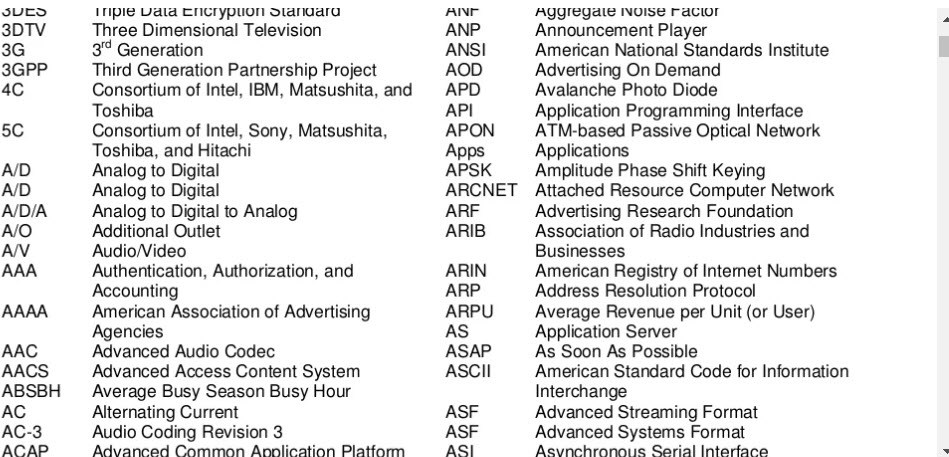
My job was to make technical ads but because I worked at McCann they had to look pretty and offer up creative flourishes.  It was my job to gather information on the plumbing (data pipes) and intelligence (software and switches) and turn that into a brief for the creative teams.  In order to do my job though, I had to learn the technical stuff. At the time, AT&T product management was filled with engineers and engineers loved acronyms. There was no one to throw me a life line in these meetings — the account executive nod was not an option.  So, I began asking the engineers questions. First, what was the acronym, and second what did it do? I’m not sure I still have the acronym glossary on my hard drive but it did get to 20 or 30 pages. I kid you not.

Anyone can make ads. Not everyone can make good ads. Getting to strategy requires speaking the language of the makers. And speaking the language of the buyers. And it also means speaking the language of the ad makers. As I’ve said a zillion times, words are important. Do what you have to do to learn the buying and selling languages.

Peace.


Cultural Literacy.

0

Brand planners look in many places when working brand strategies.  A long time ago I did an exploratory with Paul Matheson head of BBH planning in NYC when they were just getting a foothold in the states. He asked me some of the areas I studied as a planner. It was a long time ago and I don’t recall my exact answer but his response to me was “Most planners mention two things, you mentioned 6 of the 7 we typically study.” I blushed. 

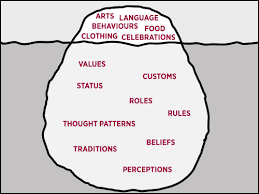
One thing I mentioned was culture.  Not business culture, but consumer and population culture. Anthropology stuff.

Today, as we in the U.S. await Jerome Powell’s speech on the state of the economy, it might be a good time to assess the economic culture facing all brands.  Dollar Stores are reporting more monied consumer shopping with them, and one only has to look at consumers filling their cars with gas to know many Americans are not happy.  That said, I live in a small city, proud of its robust tourist economy, and one can see by the traffic in town that not everyone is concerned about the price of a meal. The broadcast news media can’t go 8 minutes without talking about inflation yet they quickly report unemployment is at an all-time low. It’s like watching a game of ping pong. 

So here’s the cultural insight. Americans are money obsessed. And we don’t want to be.  All banks and lenders understand this obsession and play to it. So what do about this obsession?  We need to educate.  We need better financial literacy.  Leaders educate. JPMorgan Chase is a leader. If they spent 1/3 of their ad budget for 5 years educating Americans about finances and money and savings, targeting Americans of all strata, they could reduce our obsession. And reap the rewards.

Peace.      


Startups.

0

Startup is the germination stage of all business. Most of us joining companies that are fixed and have histories. They have onboarding and employee packets and budgets and sales trends. Not startups. I worked for a startup and it was crazy. Crazy cool. We didn’t have a product, though. We had some code. I was hired as the director of marketing. “Tink about that,” as my Norwegian aunt Inga would have said. A director of marketing without the Product – the key P of the 4 Ps. To say the target was moving would be an understatement. That said the business visionary, Jim McNiel, did wear some serious visionary glasses. Jim was able to raise $11M on a vision, a database, web objects and a PC demo.

The problem with that startup was the disconnect between the vision and the reality, complicated by a detachment from consumer experience. 

The biggest problem was the product.  I learned a huge lesson in the concept of the Is-Does. What a product IS and what a product DOES. Fergus O’Daly once said to me “Nothing happens (in marketing) until someone sells something.” And with startups, there’s often nothing to sell. Not until there’s a prototype.

My advice to startups is have a product. Not just an idea. That doesn’t mean the product can’t change toward its betterment, but you can’t start until you execute. Until you make something. Something you can touch. Use. Live with. Ideas are great — tangibles make the world go round.

Peace.


The Remediation Economy.

0

Having lived through the technology age, born of the IC (integrated circuit), I have seen multiple hundred billion dollar markets created. The typewriter was replaced by the word processor. Then came the PC. And the smart phone. The internet preceded whatever the heck Web3 is going to be…blockchain put to good use, I guess. But the truly big next market, I am sad to say, looks like it will be “planetary or environmental remediation.”

We have been take, take, taking resources from the planet for hundreds of years and the planet is pushing back. Mining fossil fuels, cutting down trees, spewing carbons into the atmosphere is about to cause cataclysmic problems for the two-eyed beings on the earth.  We can’t continue to hollow out the earth for resources and reduce planetary water and live happily ever after. Scientists are taking serious notice.

So, what’s next is finding new ways to fix the planet. And we already have our eyes on the prize, albeit half-heartedly. The Inflation Reduction Act contains $350 billion in loan and loan guarantee money for people looking to remediate environmental harm. When Silicon Valley is replaced by Remediation Valley and we start truly generating new wealth around fixing the ills of the past, we will truly have our next gen market.

Elon, Jeff and Greta, are you listening.

It’s sure going to be worthwhile.

Peace.


Tossing Copy Poems.

0

I was just listening to a radio commercial for lawn mulch.  The main idea the commercial was that a person got a delivery containing nails and other foreign thingies. A start. 

But then two copywriting issues.  One was the line “all bark no bite” which seemed to play to the aforementioned purity point. And another tagline sounding ditty: “You can see the difference.” Or something to that effect.

First, I have no idea who the company was, so the commercial failed immediately. No brand or name recognition. As mentioned, the heart of the ad was the offer of clean mulch — a problem I didn’t know existed. But at least it’s a believable problem. As for “all bark no bite” it sounds fun and tips its hat to the strategy, yet what does bite refer to? And lastly, the idea of mulch for which “you can see the difference” is silly. A waste of words. All mulch looks the same. Colors may differ but that’s it.

This is an example of a copywriter without any sales skill. Perhaps a radio station copywriter doing spots by the pound. Tossing out copy poems.

Ask yourself what’s the idea?  Build a story around the idea. Prove the story claim. Then get credit for the idea by repeating your name a few times. And a few more times.

Peace.


Don’t Worry, Be Positive.

0

One of the big centers of gravity in brand planning these days is articulation of the brand problem.  When you articulate a problem so the thinking goes everything thereafter can be construed as a solution.

(Caveat: In my brand strategy practice I’m only concerned with master brand strategy — the organizing principle for product, experience and messaging. Master brand strategy makes all marketing tactics easy. They’re easy because they toe the strategic line. Lots of brand planners are tasked with project or tactical efforts. One offs, e.g., generate leads, increase loyalty, engagement, etc.)

At What’s The Idea? the word problem is viewed as temporal. Problems change. There’s always another problem. So, rather than look for a big honkin’ problem to solve I look at positive values for which there is pent-up demand.  I look for values and endemic product characteristics that are so loud, so bright they overshadow any current and future negatives. You can’t go changing your brand strategy every time a new problem comes about. That’s what tactics are for.

Good master brand strategy makes your brand future proof. Save your tactics for defense. Use your brand strategy for offense.

Peace.  


Time Man of the Year: Authenticity

0

Dave Desmelik, a singer-songwriter, is authentic.

Chipotle quick service restaurant is authentic.

Sweet Loren’s break and bake cookies are authentic.

Jasmine Beach-Ferrara is authentic.  

82% of marketers, performers and politicians are authentic.

Where does the leave the rest of us air breathers?  If you haven’t guessed, “authentic” is not my favorite new marko-babble word. If you have to remind people you are authentic you are probably a lawyer or a used-car salesperson. Are we as a society so inauthentic that we have to position as such?  And whose fault is that? Let’s look inward. Let’s look at marketers. The people who pass off middling products and services as best-in-class. Who go to the superlative bank.

A recent white house denizen was so fast and loose with the facts many people don’t really cares about the truth.  

Marketers who used to be held accountable by standards and practices departments in media companies, are no longer. Sure, we have Yelp and Trust Pilot and other comment engines but those are cumbersome and fluky. So, we just jump to labeling things and people authentic.

It’s a waste of air. Of ink. Of digits.

Build your brand with real proof and evidence. Not words. Apparently, words only count in poetry and literature.

Peace.