Home Blog Page 25

Brand Claim.

0

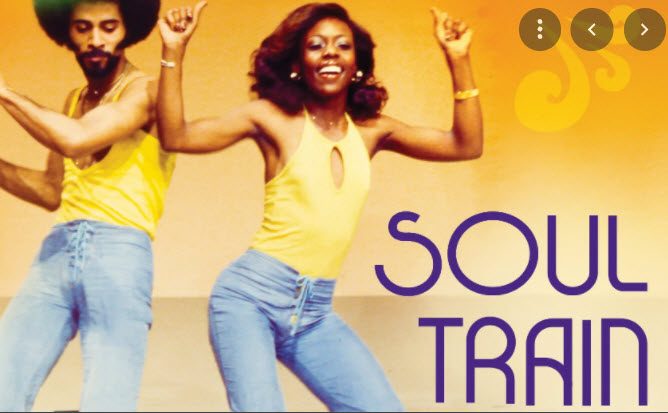
The claim for the TV show Soul Train was Black Joy is good TV.  How do I know that? Because I heard the statement on NPR and decided to make a blog post about it.  I’m in the claim business. I study these things.

While most consultants are paid by the page, delivering hundred-page analyses of business strengths, weakness, opportunities and threats, I deliver a single page, boiled down from all that information. A page with one claim and three proof planks (three discrete, actualized behaviors that allow consumers to believe the claim.)

In the case of Soul Train, conveying joy and using dance and music as the conduit was genius.

“A bottle so distinct, it could be recognized by touch in the dark or when lying broken on the ground” was the brief written in 1915 to the designers of the Coke bottle. Pretty short, pretty sweet. Today I’m sure a marko-babbling brand manager could write a good 20-page brief on the topic.

The work of the brand planner — for master brand strategy development at least — is to amass as much information about customer care-abouts and brand good-ats as one can, then boiling it all down into a single statement of value. Ava DuVernay recently said about Diversity, Equity and Inclusion “It came from a place of absence. Now it comes from a place of abundance.”  Well brand claims are all about coming from abundance and moving toward a place of absence… of singularity. A singular, powerful, endemic claim.

Master brand strategy is the most important work in all of marketing.

Peace.
 

Italian Leather Branding.

0

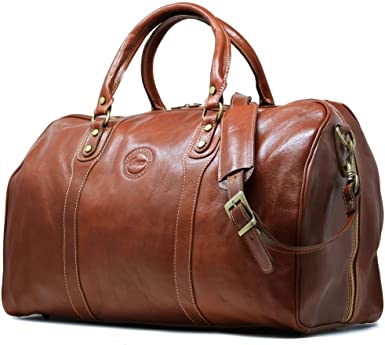
I’m thinking of changing the name of my business to Italian Leather Branding.  I don’t know why I believe Italian leather is better than any other leather but I do.  Someone, somewhere planted that seed in my mind and it wouldn’t surprise me if you felt the same way. Italian leather is softer. More supple. The most beautiful tan color. And most important of all, it’s worth double maybe triple the price.

That seed that someone planted — that’s branding.  It’s what all brand planners aspire to. To create an image in the mind of a consumer that pre- and post-disposes one to purchase. Or to prefer.  I did buy some Italian shoes one time.  Most expensive shoes I ever bought. And you are not going to believe it but they squeaked. Swear to God. My local shoe maker, Gaspar, suggested soaking the soles in water and guess what? Italian leather leaches. I didn’t know that. Water-stained Italian shoes…ouch.

But here’s the thing, it wasn’t the shoes’ fault.  Couldn’t have been the Italian leather.

Feel me?

Peace.


Novant Health.

0

Novant Health, a system based in Charlotte, North Carolina fired 175 employees this week for not adhering to their mandatory vaccination policy. Someone put on some big girl pants. If we are to trust healthcare providers with our health, it’s good to know some people in management support scientific facts. That’s why we have peer reviews and protocols and continuous improvement programs.   

While doing brand strategy research it’s important to speak with scientists to learn the rational truth and storytellers to learn the poetic truth. I never would have come up with the Northwell Health brand strategy claim had I not interviewed Yosef Dlugacz, SVP Quality Management.

Brand Strategy is about pitching and catching. And the pitching has to be based in science.   

Novant understands it couldn’t deliver on its Hippocratic Oath had it not followed the science supporting vaccinations. Love this company. For many reasons, but this is number 1!

Peace.


An Exercise.

0

Boilerplate in the marketing world is the copy used on press releases at the end of a press announcement. It usually is preceded by the word About (insert name of company.) Boiler plate is almost always unimaginative. It usually contains a rote overview of company history, highlights, accomplishments and scale.

The exercise I am suggesting for brand planners is to ask company stakeholders, during discovery, to cobble together some boilerplate for their place of business or brand.  As an exercise, it will probably be best to have the stakeholder do it before the interview, as it will really bring the session to its knees. It’s hard work.  It might also be good to have the writer limit the boilerplate to three sentences. Last week I posted about what makes a brand or company “famous.” Crafting boilerplate is an extension of that idea.

Most people go through this exercise when creating their personal LinkedIn presence. It’s a boiled down overview of one’s self for the profile.

Doing boiler plate for a person is harder than doing boiler plate for a company. In both cases it’s an exercise in concision…and an exercise in branding.

Peace.


Dynamic Strategy?

0

I like EP and Co and strategy lead Chris Plating, though I never would have changed the original agency name Erwin Penland to EP. (Stay on track Steve.) Everybody in the ad business is looking for an edge and to that end EP and Co. just launched a new research modality called EPiQ. 

I read the introductory LinkedIn post a couple of times and am not exactly sure what it is.  Marko-babble is a bear. It may be some sort of online panel that works as concept testing and creative testing.  And it seems to throw off consumer insights, either through AI or manual data nerds. Nothing wrong with that. And the name is okay. 

Where I get rubbed though is when I see explanations like this, from new hire Sheniqua Little, who comes to EP with serious chops: “Compelling research results fuel dynamic strategy and creative.”

The words dynamic strategy, in the context of brands, is an oxymoron. Brand strategy should not change with the wind. Even if consumers are driving that wind.  Brand strategy is built upon what consumers want most and what brands deliver best. (In What’s The Idea? parlance, those are care-abouts and good-ats.)

This tool seems to suggest strategy can change in almost realtime — as long as its consumer derived.  I love consumers trust me. But the Yin and the Yang of branding is a balance. Changing your strategy based on consumer Galvin Skin Response is a mistake. Lock down your brand strategy then use EPiQ to test communications effectiveness of tactics. But not the strategy.

Thoughts?

Peace.


Fame. A Brand Strategy Hack.

0

“For what are you famous?” is an interesting question to get at the crux of brand value.  Fame is such a pregnant word.  I believe Grey Advertising used it for a while in one of its positionings. Then there’s the notion of everyone having “15 minutes of fame.” Don’t forget the many halls of fame. Achieving fame is something most people want – except for those who have it.

When you ask a brand manager what the brand is famous for, it kind of cuts through the clutter. The marko-babble. The listicles.

One of my blog memes is “The Fruit Cocktail Effect.”  It suggests that when you try to be too many things in terms of brand value, you become nothing. Like fruit cocktail…where the peach tastes like the grape which tastes like the pear and the cherry. A sugary blah.

Think about fame as a shortcut to get to good insights.  Give it a whirl.

Peace.


In Defense of Ad Agencies. 

0

The state of the advertising agency business is dismal.  Employees are leaving in droves and there is underemployment.  Black and brown people are nowhere to be found. If you are over 50, you had better be the CEO… and even then your days are numbered. And Google has replaced thousands of agency jobs.

I work with a number of start-ups and young‘uns starting out in the business think Google Ad Words and YouTube videos explained customer acquisition are the way to successful marketing. It’s tactics-palooza out there.  Twenty something junior brand managers are doing $30k TV commercials, using friends with iPhones (FWi?) to shoot video, sans storyboards.

I’d venture to say 15% of the advertising business – the so-called Madison Avenue ad business – has moved in-house, where craft is more likely the beer near the ping pong table than the creative product.

Cranky much Steve?

Twenty years ago there was a creative revolution: 72 and Sunny, Mother, Droga 5, BBH,  Crispin Porter. Now Accenture is the biggest digital shop. And David Droga is chief idea macher or something.

I’m a strategy guy. Where my brand strategies end up is for the clients to decide.  I like to think though, that if a marketer invests in a tight brand strategy, they’re smart enough to want breathtaking creative. The best bet for great work is with an agency. Where the disciplines collide and thinkers rule the roost.  Not where an assembly line of tyros with titles and the algorithm do the work.

Rant over.

Peace.    


One Part Strategy.

0

I may have gotten this whole consulting thing wrong.  After a recent Zoom with a business consultant who was nice enough to let us look behind the curtain, it became clear that these men and women are really smart when it comes to business.  Brand planners? Not so much.

When talking about his business proposals, it became clear that chunking it up into three parts is business-winning. Part 1 is a review of the business and situation analysis.  He conducts lots of interviews, evaluates best practices, understands success measures and establishes benchmarks. Probably lots of other B school speak and acronyms. Part 1 ends with a presentation of findings. Most notably, the findings will contain business problems impacting the bottom line. Specifically.

Part 2 of the proposal, should you decide to accept if, is outlined as more of a strategy document. It has its own price tag.  With a proper articulation of the problem, any good business person will want to go about fixing things, so they need a strategy. The fish is nibbling at the bait. Part 2, one must imagine, will include objectives, quantification of measures, strategic option reviews and projections, and recommendations. Oh, and more interviews and some quantitative research. All of which ends in a presentation. So what does that leave?

Part 3 is Operations. Now that the problem and strategy have been identified, someone has to build something. Change something. Make the magic happen. Part 3 of the consulting engagement is where the real money is spent. The beauty of this three-pronged approach is that initially the client is signed on for only one part but typically adds on parts 2 and 3 because they fit nicely together.   

What the brand planning consultant does, at least this brand planner, is collapse parts 1 and 2 and go straight to the solution. Silly me. Rather than spend up to a year laboring over 3 parts, I use agile techniques. I get to strategy fast. Straight to sausage. Oh, and at a fraction of the cost or the business consultant. Clients don’t measure me by the pound of paper I deliver but by the idea. And the organizing principle for product, experience and messaging.

I’m a one-parter. And I like it that way.

Peace.

PS. And a good brand strategy is built to last. Campaigns come and go, a powerful brand strategy is indelible.


Targeting and Brand Planning.

0

For the brand planner targeting is everything.  But it can also be ruinous.  Finding the largest grouping of people that may be willing to buy your product or service is Job One.  Then finding a value proposition that the outsized target shares is Job One A.

I recently read that Netflix has determined there are 2,000 “taste clusters” among their viewers/streamers.  Data science can cluster people pretty finitely. But in brand planning we see those 2,000 clusters as one. Finding one commonality in taste or attitude is a challenge. But hey, that’s the job.

And no, we won’t build a brand around hangers on. People who do not care enough to commit. That would water down the target even more.     

The challenge for the brand planner is to decide whom to exclude. Once you have a sense of outliers and why they are so, you can tighten up the key value.  Let’s face it, customers deserve more attention than hangers on.

When doing your targeting and parsing that large target to determine their most sought after desires, don’t water it down and lose identity. Be tight with your value prop. Be discrete with your value prop. And be memorable.

Peace.    


Making Stuff.

0

Okay, I like strategy.  Sometimes it can be a difficult birth, but it’s such a noble profession.  Organizing.  That’s what brand strategy does. Inside the company, it organizes, the product, the experience and messaging.  Outside the company it enables creative counsellors and vendors to deliver selling brilliance, unencumbered by a blank page of intention.  For a creative person, having a blank page is hard. Really hard.  With a foot in the blocks at the starting line, facing in one direction, creatives can accelerate and thrive.

All that said, creating programs, events, campaigns and communications is what gets the blood moving. Making stuff.  Be it beautiful pictures, heart-warming cinema, a raucous consumer event — these are the things consumers remember.  (Google “brand planners prayer.”) 

I miss making the stuff that my words direct.  Watching other people make the stuff my words direct is a nice second but not a close second.  No regrets though. Advertising is a stressful business. Especially without good brand craft upon which to build.

The tagline for Lucent Technologies, a brand I worked on years ago was “We make the things that make communications work.”  That’s brand strategy in a nutshell.

Peace.