Home Blog Page 31

New Proofs Daily.

0

Yesterday I wrote that the “proofs” from my brand strategy framework are like results in the OKR (Objective and Key Results) school of management. See post here. Claim and proof are my thing; it’s what makes What’s The Idea? different from all the other brand strategy shops.

Proofs are evidence. Tangible things that explain a brand claim.

Proof helps me reverse engineer the claim. But it assumes the business has been around a while. You can’t really be a start-up. Ish. During discovery, mining proof to determine the key claim of a product is a backward-looking pursuit. Yet the beauty of this approach is, once configured, the strategy looks forward. It helps in decision making and productizing for the future. Why? Because the claim and proof array is alive. And it is the day job of the brand manager (and every other employee) is to invent new proofs to support the claim. Daily.

Lots of brand planners are rearview mirror planners. It’s best to also look beyond the dashboard. And encourage every stakeholder to do the same.

It’s a total branding approach.

Peace.



OKR, MBO, ROS.

OKR stands for Objectives and Key Results. It is a John Doerr construct renaming and tweaking Andy Grove’s MBO or management by objectives. John and Andy were big deals back in the 90s and aughts. Measurement is always a good idea. And performance against objectives is marketing.

OKRs, according to Wikipedia, are best when the success rate is 70%. The thinking being, if success is 100% the objective are too easy.

In my business the framework for brand strategy is a Claim and Proof array: one claim, three proof planks. If we think about the brand claim as the objective (a business winning value) and the proof planks as the results (activities that support the claim) we have a way to begin to measure brand strategy success — getting us a little closer to the notion of return on strategy or, acronym baton please, ROS.

While OKRs are internal business measures, ROS is a consumer-focused measure best derived from attitudes and beliefs. The degree to which a consumer can play back your brand claim, e.g., Coke Is Refreshment and proof of that claim, e.g., cooling affect on a hot day, or the bite of the cola bean – are measures that can be tracked to sales. Brand attitude trackers, when tied to sale, are how we build brands. It’s how we measure brand success.

Peace.  


East Fork Pottery Ad.

0

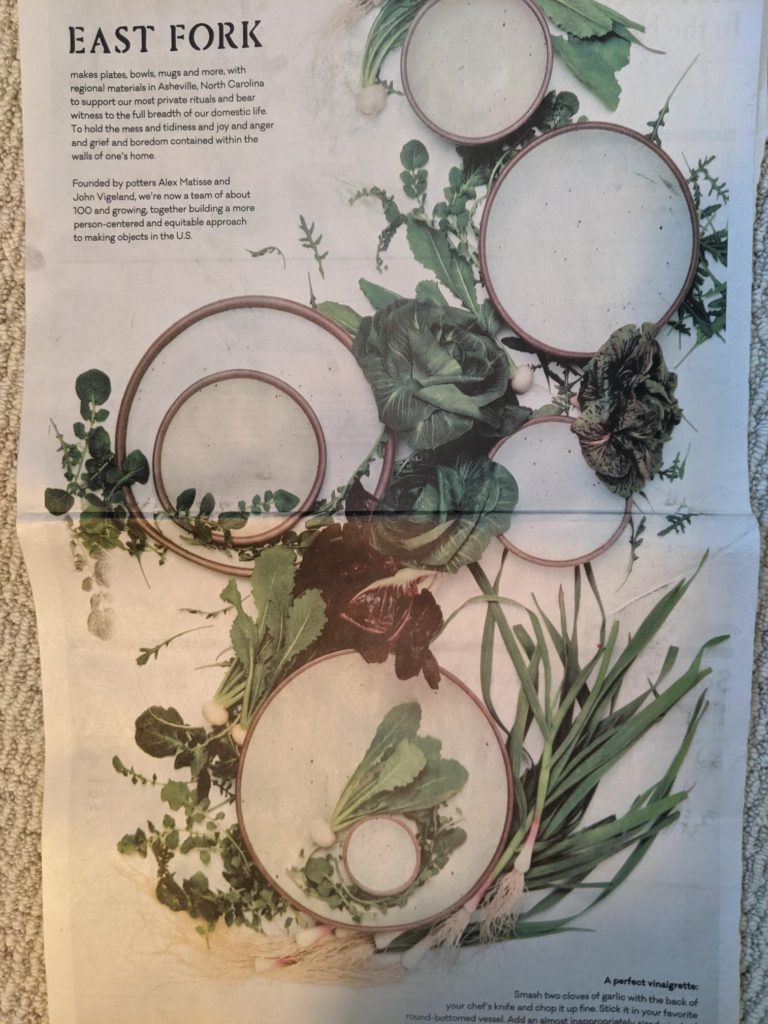
“East Fork makes plates, bowls, mugs and more, with regional materials in Asheville, NC to support our most private rituals and bear witness to the full breadth of our domestic life. To hold the mess and tidiness and joy and anger and grief and boredom contained within the walls of one’s home.

Founded by potters Alex Matisse and John Vigeland we’re now a team of about 100 and growing, together building a more person-centered and equitable approach to making objects in the U.S.”

East Fork is a pottery manufacturer in my home town of Asheville. I first took notice when they did a full page add in the New York Times Sunday Magazine. Quite an expense. The words above are copy from another ad, this one from last Sunday’s New York Times national paper.

I don’t know what to make of the ad. The visual of organic greens and plates is wonderful. And they even throw in a vinaigrette recipe. But the copy, while poetic, is a bit over the top.  I’m not sure I use plates to organize my messy life. (Or do I?) Nor am I sure they are there to contain my boredom. (Or are they?) As for private rituals? Umm.  I guess over time tableware can become part of the family but can a pottery company be my confessor. My shrink?

The copy is Asheville crunchy.  I get where they’re going. And I applaud it. But perhaps a bit less glaze in the future???  Nah. Keep it up.

Peace.


Negative Brand Brief.

0

For me, part of the brand planning experience is finding love for the brand. Because ultimately that is what we are building: a facilitation for consumers to fall in love with our brands. From the product itself to the experience of the product and, importantly, mentions or discussions of same.

Finding things to truly love isn’t easy. Everyone loves differently.

But lately I’ve been thinking these rose-colored glasses we must put on are a fraction of the total picture we see. And in these divisive times, while quick to smirk at political opponents and their POVs — even as the grown up in me says try to see what they see — perhaps it’s smart to brand plan with a more open mind. Maybe it’s time to write a reverse brief.  Filled with all the reasons a person may not like my product. As an exercise.

We aren’t hippies after all. This is a real world.  And even though my job is to find the love, my job is also to help brands succeed. And successful marketing is not a commodity, no matter what Google AdWords will have you think.

Next time I finish a brand brief, it’s a quick negative brief.

And I’ll report the results.

Peace.


Discovery Tip #8.

0

One of my discovery tricks is to interview top trade magazine writers who cover the category beat. If doing an assignment on energy drinks or beer, I run down the top writer at Beverage magazine and attempt to interview them. There are trade publications on every topic under the sun. It’s best to read a few of their stories before contacting, showing some interest and awareness of their craft, as well as picking up on language. One way to find out if they are a top writer is to see if you can gather up readership reports from the publication. Many trades report on their best read pieces, departments and writers. It’ a neat short cut.

Also, these writers have a many smart connects they interview and quote for their stories. Track them down. Today, one might call these quoted people influencers; I prefer to call them experts with skin in the game.

It’s a great way to begin to cast the net. Not only for ideas, but sources.

Peace.


Truth and Conspiracy.

0

Brand planners pay close attention to popular culture in an attempt to massage their ideas and selling schema into it. One hugely impactful, popular cultural construct today is demand for disinformation, especially related to politics and conspiracy.

Disinformation, it seems is much more interesting than typical truthful information. And when I say truthful information, I’m here talking about advertising. Nobody needs to hear me talk about advertising bombardment, it’s a given. And add to that, eighty percent of advertising is bad.

Bad advertising shares commodity claims with little proof. “Fred Anderson Toyota offers the best customer service,” for instance. Is that misinformation? Prolly. Multiply that by 100,000 and you begin to see why consumers are not real believers in the craft. But in today’s environment, uncover a little conspiracy and you have a person’s attention.

In a recent strategy written for a potty training company, I uncovered a conspiracy worth hundreds of millions of dollars. Diaper companies were productizing and strategizing ways to keep children in diapers longer. And it worked. Fifty years ago kids were out of diapers by 18 months. Today it’s closer to 36 months.

Manipulative, greedy marketing is the worst type. People don’t want to be pushed around.

We are still up to our asses in diapers (hee hee), but this conspiracy has gotten more than a few mothers angry and we’re moving in the right direction. Truth Well Told.

Not every advertising and market campaign can be a movement, but it won’t hurt planners to dig a little deeper and give the people the drama they crave.

Peace.


Service Companies Need a Brand Syllabus.

0

Branding in consumer goods and packaged goods is very different than branding in a service business. Products that are produced on an assembly line all come out the same. Their packaging is the same. Their product names are the same. Variability is negligible. But in a service business the delivery vehicle is people. And they are not the same. Sure you can dress up employees in uniforms but that doesn’t insure similar service delivery. And of course there’s training. But that doesn’t insure standardized service delivery either. People are people. Every one is different.

So how do you create a brand strategy for a service company? Through education. Using a brand syllabus. And every day is a school day. The classes aren’t led by teachers but by employees. Brothers and sisters in arms. And that syllabus? It’s pliable. It’s owned by the employees.

It all starts with an “organizing principle for product, experience and messaging,” also known as a brand strategy. The organizing principle creates a culture around inherent company values and good-ats. It develops its own language and muscle memory. The best service companies are like sculling crews with everybody pulling oars together at the same time. All working to fulfill and further the organizing principle.

For examples, please write Steve@WhatsTheIdea.com.

Peace.


Fertile or Fallow.

0

Templates are the savior and bane of the brand planner; and when I say brand planner I mean me. We are all different. Ish. I have a few Word files I go to time after time, which help me amass discovery information and insights.  What’s The Idea? readers know I immerse myself in customer care-abouts and brand good-ats during discovery. And from this information I boil down and cull. Then, using other templates, primarily briefs, I organize the info into a brand value template called a claim and proof array.

But not all questionnaires work across all categories. For instance, when interviewing world-class security hackers – Are there other kinds of hackers? – I need to learn their language. It’s a culture thing. Or when talking to morbidly obese people it’s imperative I understand their life, trauma and culture. Can’t get there with a templated set of Qs. So you create a new set. Tabula Rasa. Ish.

I wrote recently of some short cuts used to get to “claim and proof” without my normal templated outputs. This approach can be dangerous but sometimes budget requires we live dangerously. That said, going off-piste or off-template can be exhilarating.   

This ability to adapt to new situations, including short-cutting the process, is the art of brand planning. The resulting are sometimes fertile, sometimes fallow. Good planners know the difference.

Peace.


Education and Branding.

0

I’m working on a branding assignment for a K12 tutoring company and feel the need to share my excitement.  I’ve worked in Ed Tech before and fell deeply in love with .edu.  It’s a marketing category like none other.  All these marko-babble people talking about “intentional this” and “intentional that” would do well to spend some time in the K12 space.

Anyway, this tutoring business is online only… no face-to-face tutoring. As such, they were well-positioned for Covid.

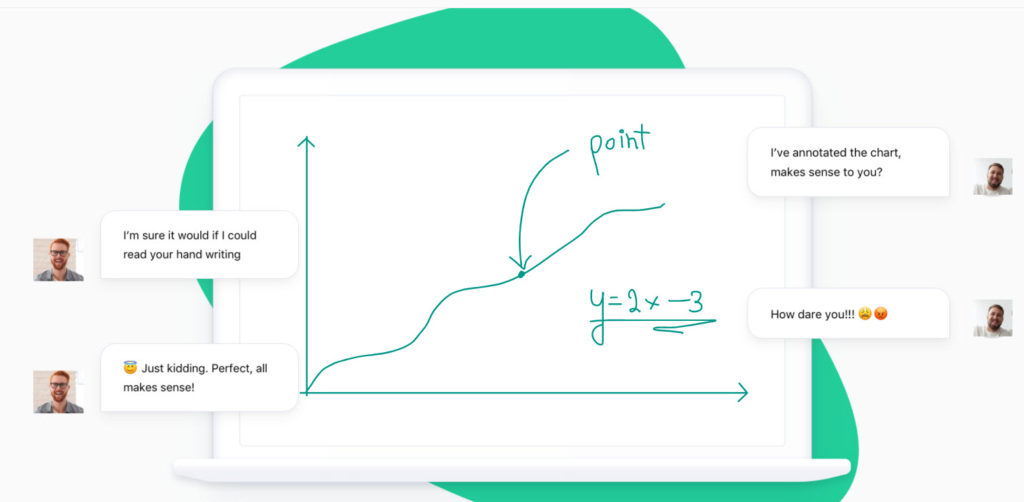
I’ve always wondered about face-to-face versus remote interviews in my business. I’m a big fan of the former. I want to see their offices. I want to know their taste in clothes and style. Want to feel what’s important to them, how they surround themselves. And I want to look into their eyes, watch them smile, do the whole body language thing. So it got me wondering about online-only tutoring.

But what’s interesting about this tutoring firm’s approach — at least the way I understand it — is that using online, real time whiteboards allows the tutor into the heads of the students. They can’t hide. “Tell me what you’re thinking” might be a great query for a student with an inactive stilus. Spelling stylus wrong might be telling. Observation by doing.  

When I interview people remotely for brand discovery, I’m hearing them, perhaps seeing them via video, but not seeing them work and think. Maybe this tutor is teaching me some tricks.

That’s why I love .edu.

Peace.


What Really Matters…Is Everything.

0


If I’ve read it once, I’ve read it a hundred times.  “Use service X and it will free you up to do what really matters.” 

I first ran into this strategy when working on an AT&T Outsourcing business years ago. It was probably a precursor to hosted web services with some consulting thrown in.  A typical B2B strategy, this presumes ancillary business practices aren’t as critical as is your main business. Cheese makers make cheese, it’s their passion. Retail, shipping, human resources, marketing are plumbing; some might say secondary, and as such outsourceable. Or automatable.

Bullshit.

Trying to automate or outsource parts of your business so you can do something you are “good at” is a cop out. You need to be good at all parts of your business. It’s the required heavy lifting that gets you to success.  Everything is important. The entire body must work together. Every vessel. Every organ.

Where it gets to be fun for me is when a client sees this and uses brand strategy to infiltrate each and every department. This is how to build corporate muscle. When every department is valued and working toward the same end it build antibodies, to carry the metaphor even further.

Don’t outsource anything. Not your social media. Not your hiring. Not your financial oversight.

Love and build your entire business.

Peace.