Home Blog Page 32

Remassify

0

Ana Andjelic wrote this about brand valuation in her newsletter The Sociology of Business:

Brands build awareness for a company beyond its target audience, hopefully propelling it in the domain of culture and increasing its chances to be part of the consumers’ initial consideration set. Through its brand promise and brand values, a company can reach customers who ordinarily wouldn’t consider its products.

She was talking about expanding the size of the addressable market.

Truer words about brands have rarely been spoken.  An indelible brand strategy sees all targets, current and future and attempts to corral value that appeals to them all. Discussions getting into culture are a bit haughty, if you ask me, but I get it. We play in culture. Inform using culture, but I’m not so sure we make culture. Society and communities make culture. Geography makes culture. Not language. Not product design.  Anyway, it’s not worth the quibble.

Peter Kim a mentor of mine at McCann-Erickson talked about outlining and understanding all the different targets that will come into contact with your brand. Looking at each target individually then culling to find common values (or care-abouts) concerning the brand. He suggested take all these different targets and “remassify” them. Into one. Finding a shared higher-order value.

Dangerous? Might it omit some more potent value? Yes.  But will it speak to more people in simpler language? Yes. Language that builds a brand appreciated by more targets. 

Tink about it, as my Norwegian aunt used to say.

Peace.



Brand Strategy Lite.

0

Yesterday I wrote about shortcutting my normal brand planning rigor, as necessitated by lack of time, budget, client situation or act of God. I don’t like to do it but sometimes an organizing principle lite is better than nothing.

One of the tools I tend to do without when doing planning lite is the brief. My brand strategy brief, a borrow from the NY office of McCann Erickson, has been slightly modified over time.  It’s a linear or serial document which navigates things like brand position, brand objective, target, key desire, role of the product, reason to believe, the ephemeral brand essence and brand claim. I call this a serial document because when complete, starting at the beginning, the brief tells a reasoned, logical story or path to the claim. That doesn’t mean the components always fit together right away. Sometimes they need to be burnished. Sometimes revised.

When I do brand strategy lite and overlook the logic ladder (brief), it can still work.  But I kind of feel like I have a hole in my pants and no underwear on.

Peace.


Mentoring and The Deep Dive.

0

I am a mentor in a program called Elevate. It’s a wonderful group of men and women who donate time and experience to help startup entrepreneurs in the Asheville, NC area. Supported by Venture Asheville, an economic development coalition of Buncombe Country and the Asheville Chamber of Commerce, it uses a mentorship framework developed by MIT.

One thing the brand planner in me is finding difficult is completing the discovery process I use in my day job. That job is to define brand strategy which guides product, product experience and messaging. Getting to that strategy requires a deep dive into business metrics, customer care-abouts and brand good-ats, which when culled and refined make all tactical decisions easy — from hiring to web design to product extensions and more.

But as a mentor, I’ve found instances where we only talk tactics. The deep dive discovery I’m used to is not part of the rigor. Flying by an instrument panel, if you will, rather than eyes open with the landscape before me.

With brand discovery typically requiring 75-150 hours to wrap my head around the business, its problems, challenges, and opportunities (which isn’t practical) I sometimes feel the need to scratch my head. 

So what do I do? Well, I try to innovate. To short cut. I asterisk my recommendations. But most of all I sponge up as much as I can and rely on fellow team members. It’s a different approach. And different is good. It sharpens skills.

Peace.


Feels and Shares.

0

Unilever just made the news by agreeing to remove the word “normal” from its marketing materials in the health and beauty categories.  It, rightly, is offensive to people who feel they may not be normal. And who may feel excluded. Bravo. Everyone is normal if alive. All part of the gene pool.

That said, normal is a not a word I would every use in brand strategy, unless I’m trying to position against it. (Said the fairly normal white guy.) In brand strategies for clients, I want everyone to feel special. To feel their own flavor of special. To feel special when using client products or services.  Yet, to feel special one needs to first feel. And therein lies the secret sauce of great brand planning.  Don’t treat consumers as cardboard users. Or data points. Or metrics on a dashboard. That’s for accounting. Brand planners look into the souls of consumers. We cherry pick feelings we believe to be shared within the confines of our product category. And that’s hard. Not everybody shares the same feelings because life is not equitable. But we try.

It is the lifeblood of the brand planner. Feels. And Shares.

Peace.


The Tutor and the Brand Planner.

0

I’m working with a startup in the math tutoring space.  I did a Q&A interview yesterday of the key company stakeholder.  Having done a deep dive in the K12 education space in a prior engagement, I was eager to hear how this young man approached the problem of educating kids in need of improved math skills.

A critical starting point for his organization is to get a level-set on where the student is in the learning process.  That is, what they know, what don’t they know, and what type of learner they are. Good pedagogy tells us not all students are the same and not all students learn at the same rate.  Makes sense. The best teachers teach to the student’s aptitude and place on the learning curve. It requires a lot of listening on the part of the teacher/tutor.   

The approach is not dissimilar to that of the brand planner. We don’t just begin outlining some formula for brand positioning and success.  We begin by plumbing the depths of the brand owner’s understanding of the product/service.  Then we gather information on their aptitude and ability to deliver key value(s). We listen. We learn. And we build trust. Ultimately, we use the foundation of that learning to guide our planning rigor. That’s not to say we’re changing the algebra. Or our formulas. But we are learning who the brand owner is and taking our cues from him/her.  Only when they trust us, will they follow us. Trust the process. Understand the pupil.

Peace.


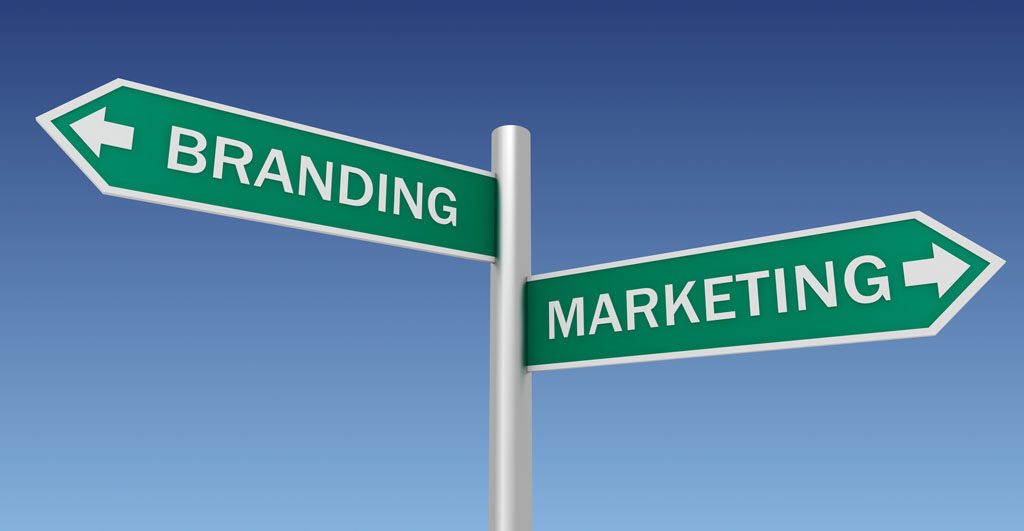
Marketing and Branding Are Different.

0

I was listening to a segment on Fox Sports Radio…I said sports radio… and one of the guys was talking about the NBA logo and its value.  I may have misheard but its possible someone had suggested putting Kobi’s likeness in the logo. The talk show host, it might have been Ben Maller, was against the idea suggesting it’s bad business to mess around with a very recognizable logo — one with so much brand equity.

He went on to say “Marketing is the battle of perception not products,” and I go all “Whoa, hold up.”

Au contraire sir.  Marketing is, most definitely, the battle of product. “Sell more, to more, more times, at higher prices” said Sergio Zyman.

Brand Strategy is the battle of perception. Brand Strategy is the brain work, the mental conditioning, the preference creation that leads to predisposition.  Brand strategy is words on paper that directs the mental outcomes that change consumer behavior.  Moving a consumer closer to a sale. Marketing encompasses the tactics – governing product, price, place and promotion – that activate a sale.

These words are not interchangeable. Brand Strategy is strategy. And marketing is the mission critical plumbing that makes it happen.

Peace.


Jeep Grand Cherokee Brand Controversy.

0

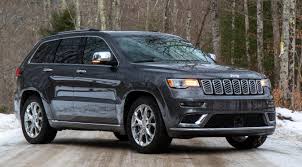
Representatives of the Cherokee Nation have asked Stellantis, the car manufacturer that owns Jeep, to stop using Grand Cherokee as a brand name of the top-selling SUV. Stellantis by the way, is the name resulting from the merger of the Fiat Chrysler company with Peugeot. (I’ve got to get out more.)

Living not too far from Cherokee, NC and having read up on the Tribe’s history, e.g., Trail of Tears, broken treaties, deforestation, racism, I understand their sensitivity. It’s time for a change.

Naming is tough. Just look at the moniker of Jeep’s parent company. Hee hee. And it will take fortitude to rename this car brand with such a strong heritage. All the more reason to do it right. And with permission. Perhaps negotiate with the Cherokee nation and use something from their native culture. It’s a respect thing not a money thing.

Most Grand Cherokee owners will not be happy with the name change. That’s up to them. Jeep is a powerful master brand and will lend a hand to any car name chosen.  But my recommendation would be to celebrate the Cherokee Tribe with a commemorative name, approved by the Tribe, that suits the car and strengthens it’s Americana cachet.

Peace.


Print Journalism

0

I subscribe to The New York Time national edition.  I counted 1, 3/4 pages of advertising in the first book or section this morning. The print newspaper business is in trouble. You know it. I know it. Luckily, after a slow start, NYT online is going gangbusters. If you search my blog posts from 10-12 years ago you’ll see I held out great hope for the online property – even when it was slow to adapt.

If “All the news that’s fit to print” isn’t booking serious ad revenue, the paper-paper that is, what must be happening to newspapers in secondary and tertiary markets?  It’s scary.

One solution might be to hire and promote the absolute best journalists in the land. And make them rock stars. Maggie Haberman may be the closest thing the Times has to a rock star. But there are scores and scores of other writers who need elevated personas and reputations. I know it cuts across the grain of the Old Gray Lady to take second chair to an individual writer, but it’s a potential solution. 

Where will the money come from to pay and promote these stellar writer? From the budget that fills some of the other floors at headquarters. Cut the masthead by a third. Sell more stock. I don’t know.  Twitter is already helping writers grow their reps. Double down.

We need great journalism. We need great writers.

Peace.


Health System Brand Strategy.

Brand planning for a health systems is not easy. When weighing customer care-abouts there are few. Well actually, just one: make me healthy. And deciding how best to serve up the health system good-ats, which stakeholders tell you are many, until you ask them specifics. And they all say “It’s our quality of care.”  You have to be a surgeon to extract true evidence of differentiation and superiority. Not easy.

I got into health care and health system brand work by telling a system it had a great strategy  “Setting New Standards In Healthcare,  but horrible execution.  None of their advertising and marketing material showed the system setting new standards. Imagine that? Having a strategy then ignoring it.  You know what’s worse? Not having a strategy. And even worse allowing your public image to be developed by an advertising copywriter. An advertising person who supposedly knows words but not your business.

Advent Health, a system in the southeast, uses the tagline “Feel Whole.” Part of the system’s value proposition is its commitment to “the healing ministry of Christ.”  I didn’t know that until I dug deep into their website. A wholistic, spiritual approach to healthcare makes sense for Advent. I get it. I’ve worked with religious health systems before and they take their missions seriously – even to the point of not performing abortions or treating addiction. It’s not why I’d go to a hospital, but hey.

If Advent wants to heavy up on Christianity, that’s their decision. But then at least deliver it in your branding and communications. Don’t go all x-ray equipment and prescription technology on me. Spiritual wholeness is your wild card. It’s what makes you different. Celebrate it. Don’t then act like every other hospital system.

Did I mention hard?

Peace.  


Close Your Eyes.

0

A good deal of my brand planning discovery is spent delving into brand good-ats.  Things at which the brand or org is good. The other half of the discovery rigor looks into customer care-abouts which, at least with less expansive engagements, get a bit less attention.  For full on branding assignments, we recommend a strong quantitative research component, but many clients choose to pass on that expense.

Anyway, when looking at the customer side of the brand discovery equation there are lots of tools: customer interviews, purchase analytics, marketing and sales team input, retail observations, secondary research, etc.  And let’s not forget filling out the customer journey templates – a big pop marketing tool. But there is nothing in the world better to finish off your customer care-about research than sitting in a dark room and thinking like a customer. Take the time to place yourself in the life of the consumer. Thinking thought their day. The whole person. The day parts. The family. The leisure. Close your eyes and sit with it. For a while.

A big “learn” for me in brand planning occurred when I was told how unimportant my product was in the whole life of the buyer. Context creates insight.

Close your eyes and be the ball.

Peace.