Home Blog Page 42

A Letter to the VC Community.
0

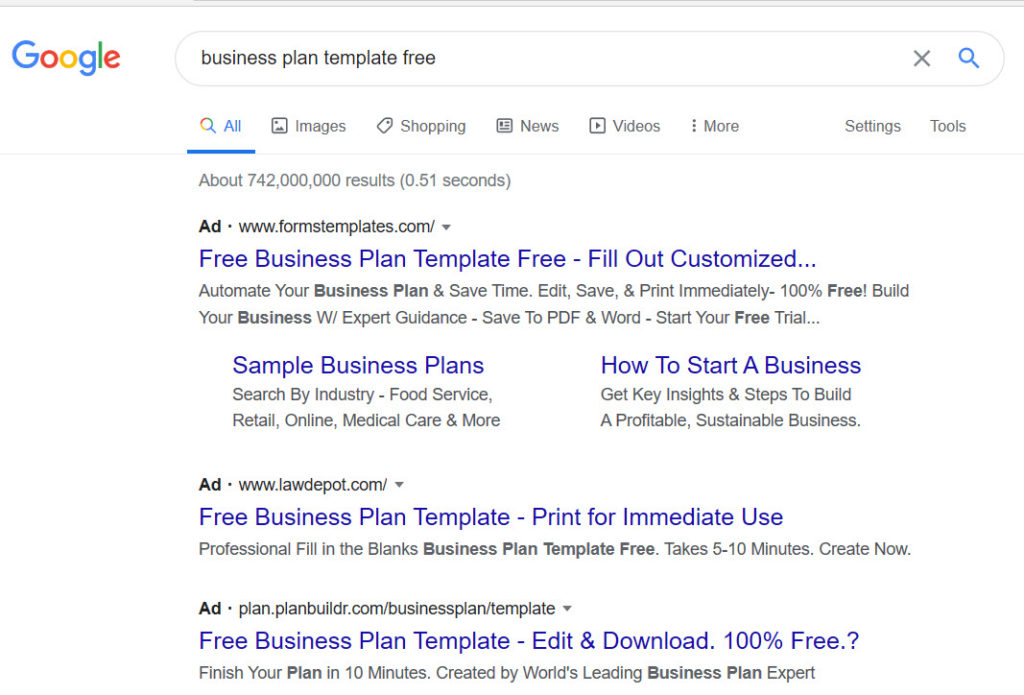
I recently read a business plan for a new company which, I suspect, was based upon a templet someone developed for people trying to raise money for a startup. Below are the sections:

Mission
Product
Customer base
Competition
Industry Overview
Market Analysis and Competition
Sales and Marketing
Ownership and Management
Operating Plan
Financial Plan

It looks like all the bases are covered and I’ve little doubt a lender who reads all the sections would be better prepared to make a funding decision. Ish. You see, a business plan is not a true indicator of success. What it lacks is a deep dive into consumer values, behaviors and biases. That’s where a brand plan comes in. These two elements of marketing need to be interconnected. Without the business plan you’re overlooking product, manufacturing, distribution, pricing and cash flow. But without a brand plan you are not understanding demand, emotion, psychology and humanity.

This is not an “art and science” discussion. Branding is not all art. There’s a degree of reflexology involved.

If you are in the venture capital business, you would do well with your investments to require a brand plan in addition to the business plan.

Peace.



A Brand by Any Other Name Is Not a…

0

One the newer questions in my fact-finding battery used in brand discovery is “How did you come upon the name of your brand or company?” If the answer is a simplified, shallow or sentimental one, e.g., named after my first dog, that is telling. Conversely, if the stakeholder sweated the details, as one might when naming a child, then it sets up a more fertile ground for learning. It can offer a deep preview of strategy.

If the story about the name is convoluted and/or meandering, one can expect a similar environment in brand planning. And that’s okay. It’s the master brand planner’s job to prioritize direction. To make decisions easier for the stakeholder. Not unlike which lens is clearer at the eye doctor.

I know a brand is an “empty vessel into which we pour meaning” but knowing where a brand name came from can provide critical info. Either from a content and strategy point of view, or a psychological/Jungian view.

A name by any other name is not your brand.

Peace.


Things We Remember

0


We remember beauty.

We remember new.

We remember rich.

We remember melody.

We remember funny.

We remember nature.

We remember poetry.

We remember pain.

We remember educators.

We remember warmth.

We remember charity.

We remember happy.

We remember love.

We remember triumph.

These are the things we remember.

These are the things consumers remember.

(I post this brand planner’s prayer once a year…as a reminder.)

The Brand Brief.

0

When a creative person looks at a blank screen or page, and tryies to come up with an idea for a piece of marketing, there’s often an uneasy feeling. Because creativity and selling are dissimilar activities.

That’s why God invented the brief. Often called the creative brief: a project doc that outlines the business problem, target, and hopefully some stimulating insight that can act as a catalyst for the idea. If the creative brief is too proscriptive, the creative person finds it limiting. An idea buzz kill.

That’s why brand briefs are better for creative people. A brand brief provides a macro view of the selling premise. It introduces the environment, the language of the consumer and his/her perceptions and attitudes toward the category. It’s broad enough so as to make a creative person feel less confined. And done well a brand brief provides a fecund field in which to plant and cultivate ideas.

The brand brief is the operative strategy and stimulus doc a creative person needs before beginning work. Each content assignment should also include a short project description outlining the chore and goal.

Stimulate your creative team, don’t scare them off.

For a look at a some actual brand briefs, write Steve@WhatsTheIdea.com

Peace.


Services Delivered Through Screens.

A few years ago I did some contract work at ad agency JWT on the Microsoft business. While there that I met Josh Shabtai. Josh had a digital title but his thing was gaming and coding. You could tell he wasn’t one of those guys you easily could put a label on or fit into a box. He was just Josh and you knew he could invent and solve problems. Fast forward a few years and lo-and-behold he is living in the NC piedmont working at Lowe’s. Didn’t see that coming.

His title is Sr. Director | Ecosystem, Lowe’s Innovation Labs at Lowe’s Companies, Inc. and yesterday I had a chance to see him online at a PSFK event (thanks Piers Fawkes) entitled Future of Retailing, something/something.

I shop at Lowes because it is closer, but I’ve always thought of it as Burger King to Home-Depot’s McDonald’s. Well, I’m not so sure anymore.

Josh and Lowe’s understand that a real opportunity zone for Lowe’s is service — for consumers and professionals. Tool geeks want to geek-out with other tool geeks. Pretenders like me want to learn without embarrassment. Tyros want their hands held. And for all DIYers, YouTube is the go-to platform. Josh sees a future in which “services are delivered through screens” and his job is to make the Lowe’s Innovation Labs ground zero. Why cede the home improvement service to YouTube? So he’s building.

The journey should be an exciting one. Watch out for it.

Peace.


Coty’s Latest Marketing Bet.

0

Coty Inc. has not been doing very well of late. It’s stock is down 66% according to the NYT. Coty just announced buying a 20% stake in Kim Kardashian West’s cosmetics company. In January, it purchased a chunk of Kardashian’s half-sister Kylie Jenner’s cosmetics company. Seems they are smitten with the beautiful, broadcast and social media stars.

Coty, the highly-leveraged owner of Max Factor and Covergirl, has not shown an ability to market with the times and now has decided to “buy, watch and learn.” I worked at McCann during L’Oreal’s heyday and as most brands were churning out TV spots, L’Oreal worked on one spot all year. Brand building was a complete and total art form. “Let’s track down the designer of the dress, Marisa Tomei wore, in___.”

Today with fast twitch media, cheap digital video and a fickle news cycle, everything is different. Looks like Coty has thrown in the towel and plans to learn from the entertainment industry. Progress?

Advertising and branding have always been part art and part science. If Coty can extract the science from the success of the Kardashian/Jenner ventures, hopefully it can recapture some of the art. 

Peace.


Kill Off That Low-level Dull Tone.

0

We have a mole problem in our neighborhood. A couple of families across the street planted some pinwheel and noise devices in their grass that make a low-level tone that hums for about 7 seconds every half minute. It’s not easy to hear but when it’s quiet, it’s there. I guess it’s not as loud as, say, playing the Rolling Stones with the window open but it’s there. And it’s annoying. After a while, I wonder if it’s worse than having moles. I kinda think it is.

Marketers and advertisers suffer from this dilemma. They find a low-level selling noise and publish it. Over and over. Over and over. Repetition or frequency are said to be good things in advertising. But when the message is unwanted or uninteresting, it is not a good thing. In my last three posts I wrote about strategy, simplicity/clarity, and stimulation. Good values all. But let’s not forget that we have to overcome boredom. And disinterest.

When I develop a brand strategy, it is based upon proof of claim. The job of the brand manager is to constantly seek out new proofs of claim. And share them in interesting ways. New proof is the elixir of brand building.Tired and retread proof create brand disinterest.

So awake lads and ladies. Keep mining your brand proofs. Build a book of them. Cultivate them. Kill off that low-level dull tone.

Peace.


Communications or Stimulations?

0

A couple of days ago I wrote about communications sans brand strategy and what a waste of marketing energy it can be. So get yourself a brand strategy.  And once in place, then it’s time to start working the tactics. Social media is huge today. Advertising still holds it’s own. PR, promotion, direct response are all arrows in the marketing quiver. But I’d like to explain the difference between communications, a one-way or bi-directional exchange of information and stimulation, defined by Webster as: “To rouse to action or effort, as by encouragement or pressure; spur on; incite.”

Someone at the Ford Motor Company once said about advertising, it has to make you “feel something, then do something.” That advice is about stimulation — and it’s the best advice anyone can heed when creating marketing tactics. Feel and do.

I’ve written lots of marketing plans and often enough a goal is to change attitudes. Many brand planners are all “up in” changing attitudes. But the best marketing money can buy is not about communications, it’s about stimulations. Stim is in.

Peace.


Simplify and Organize.

0

I can’t tell you how many times I’ve gone into meetings and introduced myself as “a simple man.” Perhaps not where you want to start when trying to convince someone to pay you a nice sum for your services. Most people want insightful, experienced problem solvers for their money. If their problems were simple, they wouldn’t need help. And, the fact is, most marketer’s problems aren’t simple. They are layered. And textured. Multivariate.

But my job is to take complexity and simplify it. To see through the weeds and prioritize the goods and the bads. Then boil down the complexity into a key value (claim) and three support values (proof planks) that are easy to understand and digestible. Why? Because consumers have more to do than think about your brand all day. Simple and compelling win the day in brand strategy.

Marketers who spend millions on messaging untethered to a brand strategy are moving targets. They are undisciplined. They are investing in confusion. Conversely, marketers who have a compelling brand strategy, simplifying customer care-abouts and brand good-ats, offer a clear picture to consumers making everybody’s job easier.

Simple outperforms complex any day. That’s what consumers care about. That’s what a good brand strategist cares about.

Peace.


Marketing Communications Without Brand Strategy.

0

What business are we in as marketers? Most would say sales. Drill past that and ask how marketing gets to sales, the next up word is likely communications. Marketing communications is a term of art in the business of sales.

I am in the branding business. Way back when, branding referred simply to identity. Brand a cask of olives. Brand cattle. Brand Chinese porcelain. Today the term is way overextended. Neophyte marketers misuse the term as a verb, all the time. But that’s a story for another day.

Brand strategy — how you build a brand — is a means by which to organize communications and experiences to create a value (supported by a subset of other values) in consumer minds. Unorganized communications detract from this effort.

Any person at a company or acting on behalf of a company, involved in communications, must know the brand strategy to operate effectively. To be a participant in brand building. It guides every blank sheet of paper, every empty computer screen. Hopefully, every creative thought.

Truman Capote once wrote and pardon the translation, “That’s not writing; that’s typing.” This is how I feel about marketing communications sans brand strategy. It’s typing.

Am I right Adrian Ho?

Peace.