Home Blog Page 43

A Tale of Two Salespeople.

0

I go to REI yesterday to exchange a pair of Oboz hiking shoes for a wider pair on what was Day 2 of their retail reopening. I had purchased Oboz because a friend, Skip, told me a wonderful story about his buying experience. If you read my previous two posts you’ll recognize Skip as an Oboz “Advocate.” Skip went to REI having done some research but uncommitted to a brand (he likes researching things). His salesman was of a certain age – not an age you’d associate with lots of rigorous hiking – but Skip’s a mensch and didn’t hold it against him. Good thing.

The dude tells Skip he’s been in the shoe business his whole life, sharing bits of his resume. Then he goes on to tell the Oboz story, highlighting their special “O Fit Insole” and all the other cool, comfort and durability features. Skip was sold and now swears they are the most comfortable hiking shoes he’s ever owned.

My shopping experience was different. I had picked up my Oboz the day before, sight unseen due to the Virus, and was returning them to get a wider size. Arriving in the shoe area I was met by a very nice young saleswoman. She knew her brands, models names and sizes. She went back to the store room and returned with my wider shoes. Then she slid the shoes to me across the floor. (Perhaps as instructed.) This saleswomen though simply transacting business had an opportunity to work me a bit. Maybe even turn me into an advocate. But she did not. It was a lost opportunity.

This is a tale of two sales people. One I’d never met but who had a multiplier effect on a Oboz sale and likely hundreds more. The other was a transactor of business. Friendly and efficient.

Just as there are two types of sales people there are also two types of marketing: the “slide the product” and the “engage and educate” the consumer. Which makes more sense?

Peace.
 

The Two Types of Brand Strategist.

0

My practice, What’s The Idea?, works on master brand strategy not everyday strategy. I set the strategy for all brand activity, for now and ever after. Unless there’s a big business discontinuity or business model change I’m only needed once. Brand strategists who work at large ad agencies on the other hand, are more seen as ongoing problem solvers. Or creative department lion tamers. They’re a strategic lens for important projects — to keep them scientific and on track.

My work is upstream. Agency brand strategists tend to work downstream, closer to a sale, in project land. I’m not denigrating problem solvers, I love these people.

Both type of brand strategists are critical but if you ask me the most critical work, the fundamental brand work, is with the master brand. Think strategy for winning the war, not strategy for winning a battle. Without the former, the latter can be randomized.

My main competitors are large standalone brand strategy companies like Interbrand, Super Union, Landor and Siegel+Gale. But in addition to doing what I do, they also offer naming, logo development and graphic standards. That’s why an engagement from one of those standalone shops begins at $250,000 ish. I unbundle the paper strategy from all the add-ons. It’s a cleaner approach to master brand strategy.

In master brand planning we discuss the import of importance.

You feel me Jane Geraghty?

Peace.


Fuel For Advocates.

0

Yesterday I discussed the importance of advocates as a target in your brand strategy. An advocate being someone who is a user of your brand, who loves your brand, and most importantly, who tells friends and acquaintances about your brand.

I empahcized the importance of giving advocates “fuel” for their work. Fuel being evidence of brand superiority. Or as I like to call it proof. But proof needs to be refreshed to keep advocates excited.

(A quick refresher: at What’s The Idea? the brand strategy framework comprises “one claim and three proof planks.” Unsupported claims are hard to convey convincingly.)

The job of the brand strategist is to keep the proofs coming. Brand strategists and brand managers search for proof as miners search for gold. Painstakelingly. And refreshed proofs keep brands vibrant.

As we brand plan claim and proofs across our many targets, let’s not forget our most valuable target: the advocate. He/she/him/her/them/those are special and should move to the front of the line.

Right Cindy Gallop?

Peace.


Advocacy in Brand Strategy.

0

One of the least understood parts of branding is advocacy. When discussed in marketing circles, more often than not, it’s referred to as loyalty. But loyalty really just means repeat customers. Advocacy offers a multiplier effect. Advocates refers other customers to the brand.

In social media circles advocates are called influencers; people with social media followings who often shill for products. They are Posters (not Pasters) who others look to for advice about hallowed brands. Social media has taken advocacy and renamed it and tarnished it, in my opinion. They have overly commecialized it.

A personal friend or acquaintance, with a Jones for a restaurant or brand of hiking shoes, is way more believable as an advocate than is a social media promoter.

Advocacy accounts for a shit-ton of sales. Word of Mouth. Peer to peer. Personal recommendations. Whatever you call it, advocacy does a lot of heavy lifting in the sale process. When you look at Steps-To-A-Sale models, the most famous of which is probably AIDA (Awareness, Interest, Desire and Action), you can see how a face-to-face advocate can collapse those steps in a matter of minutes.

It’s important to develop your brand strategy claim and proof array that works for advocates. One that constantly gives them new fuel to help in their work. Advocates for your brand that sound like broken records burn out.

Peace.


Is-Does

0

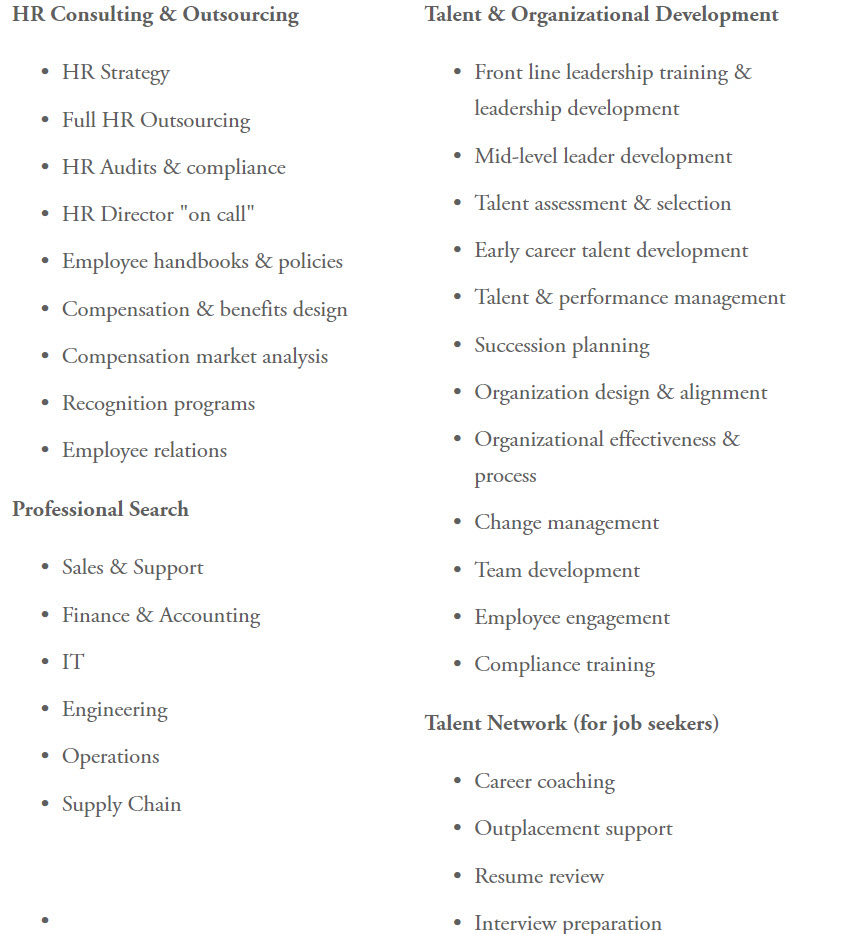
The companies with the biggest need for brand strategy are service industry companies with complicated stories. Companies that do multiple things. An acquaintance shared his new business card recently and it said his businesses were: HR Consulting, Outsourcing, Training and Coaching. A previous business card added a number of other areas of operations.

Here’s what their website says:

A brand strategy is defined as an organizing principle for product, experience and messaging. It simplifies and governs how you operate and what consumers expect of you. But first consumers must know what you do. As the example shows, some service companies have a hard time with this. So rather than boil down what they do into a digestible description they provide a long list. Or just add the word “services” which acts as a catch-all. Not helpful, trust me.

Step one in branding is to get the Is-Does right. What a brand Is and what a brand Does. And step one of the Is-Does is getting Is right.

Can you say what your company Is in a word or two? (Mine is a brand consultancy.) Send your Is to Steve@WhatsTheIdea.com for an eval.

Peace.


Selling Is To Buying What Teaching Is To Learning.

0

I’ve spent my entire career (save for a few painted houses) in businesses allied with selling; mostly advertising, marketing and brand strategy. For 8 months I worked at an education technology company. Not only did I have to learn the products and services of the company, I had to learn the language and culture of the people who bought and used them: teachers and administrators. Taking it a step further, because that’s what planners do, I wanted to also understand the needs of the teacher’s customers: the students, parents and communities. I did a really deep.

My education in education changed my outlook on marketing. It changed my outlook on selling. You see, there is a difference between selling and buying. We sell so people buy — but they don’t always. Similarly, there’s difference between teaching and learning. Students are taught but don’t always learn.

If you are teaching and the kids aren’t learning, are you really teaching? If you are selling and the consumers aren’t buying are you selling? When the answer is no, marketers often change their ad agency or hire a business consultant.

I’m here to suggest, if you are selling and consumers aren’t buying, you have a brand strategy problem. Brand strategy at it’s most foundational level identifies what a brand (company) is good at and what its customers care-about. With this information in hand, learning begets buying.

Peace.


Building Authority.

0

I’m working on a social media program for a company that happens to be under a great deal of pressure due to the coronavirus. Our triage plan is to use free media to build web traffic and spike some retail sales.

While working on this assignment I ran across a blog post by an old McCann pal of mine who has gone on to have a very nice career. In his post, he spoke of the importance of building “authority” in the social sphere. I know what he’s getting at but the word authority got me thinking. You see, I’m positioning the business owner of my triage project the same way, the difference is I don’t use the word authority. I use the word educate. An early lesson learned while working with AT&T a while ago – a lesson that has become a cornerstone of my branding practice – is “Leaders educate.”

If leaders educate, what do authorities do? Author? And that’s the difference.

Especially in social media where scads of people are authoring and only a few are educating.

I had a turnaround in college after hearing Rod Stewart sing about me, me, me people. The best people are you, you, you people. That’s the difference between educating and creating authority. 

Peace.


Another Brand Planning Hack.

0

When I do brand planning for a new client I spend a lot of time interviewing people. Company chiefs, salespeople, subject matter experts, influencers, buyers and sellers. But I am not always blessed with assignments offering that budgetary or time luxury. So I have to hack.

For one of the largest banks in the U.S., working on a content strategy for its corporate website, I wasn’t asked to develop brand strategy. But I can’t do content strategy without brand strategy so I hacked.

My hack was to print out 50 pieces of original content from the existing website, cut them into little squares inclusing attendant pictures, and tape them randomly to an oversized white board. The content included only deeds, proof and evidence, not claims or fluff copy.

The client and team were then to be tasked with doing a sort. That is, to move the content snapshots around the board and put them into clusters or like patterns. Any outlier ideas, one-offs, were to be placed on a different part of the board.

The end-game was to identify clusters, evaluate and prioritize them. Ideally for further research.  This clustering, with active hands and minds, is an interesting exercise. It’s also a short cut to see if a company is as concerned with “customer care-abouts” as they are with “brand good-ats.”

Peace.


The Difference Between a Product and a Brand.

0

Do you want to know the difference between a product and a brand? Of course you do.

A product is company-owned. A brand is consumer-owned. Simple at that. Products are the domain of the makers. Brands exist because of consumers. Ipso facto.

The tension this statement points out is intensified when company and consumer are not in synch. And the tension between buyer and seller is often real. Making and selling is complicated. Buying, not so much. When buying becomes complicated, consumers opt out. Or delay.

This is where brand planning comes in.

Brand planning and brand strategy works to align the maker with the buyer. The brand strategy goal is to remove the tension. Remove what complicates.

An early mentor of mine, Fergus O’Daly, once shared a marketing quote attributed to a few luminaries (Peter Drucker, IBM’s Thomas Watson, and Arthur “Red” Motley) “Nothing happens until someone sells something.” I would recast that phrase to say, “Nothing happens until someone buys something.” The brand planner’s job is to focus on the buyer in ways most product people don’t.

Try us, you’ll like us.

Peace.


Posters of Yore.

0

I’ve bifurcated the social media landscape into Posters and Pasters. Posters are original content creators: musicians, artists, video creators, subject matter experts and bloggers. Pasters are the other 92% who curate other people’s stuff. Pasters share links.

But there is another group of social media cohorts that have been growing in importance over the past 8-10 years. Part poster, part paster, they have become a cottage industry. The Influencer. Influencers come in many styles and flavors so you know it is a thing. There are micro influencers. Nano influencers. Not to mention mega and macro, all referring to the CPM they are paid to post on their feeds.

But some influencers are tainting the waters. They’re all hat and no cattle as the Texas saying goes. They are more videogenic than thoughtful, truthful problem solvers. More entertainment than value. Ten years ago, the way for an influencer to make money was to monetize through a banner ads and newsletters. It was a craft. Today, they’re paid by ad agencies and product placement companies and have become a media channel all to themselves. (Oh, and they may also be buying their followers.)

Don’t get me wrong, there are a thousand of great influencers out there who put in the time, dedicate themselves to helping educate others, and sharing about the topic they love. The difference is, they are about the love of subject and intimacy with followers, not the CPM. 

They are Posters of yore.

Peace.