Home Blog Page 28

Proof Clusters.

0

You are never too old to learn new tricks.  Coming out of the advertising business as someone who wrote a lot of advertising creative briefs (strategy instructions for art directors/copywriters), I began my brand strategy business by writing brand briefs. The brief I used, and still use, answers a serial set of questions (a template, if you will) designed to uncover brand strengths, deficiencies, target care-abouts, market observations, etc.; all of which pointed toward a brand claim or promise. (“Coke is refreshment,” for instance.) The more discovery I did on the brand (interviews and research), the easier it was to fill in the template.

But the serial questions had to tell a story. One with a beginning, middle and end. And if the pieces or segues didn’t fit perfectly it was problematic. Clunky.

Well, the new trick has to do a new brand strategy framework I call Claim and Proof. After discovery, with all information and data gathered, I now search for what I call proofs.  Evidence of value or superiority. Not marketing words like quality or service, but real acts, deeds, procedures or product spec.

Under closer inspection, some of these proofs are likely to cluster. When key clusters of like-values emerge, they begin to tell a story. And from the proof clusters and my notes I can then walk back a brand claim. My brand strategy framework is constructed with one claim and three proof planks.

I still write brand briefs for clients who want the full-monty, but they are easier to write when the framework is complete.

Peace.



Claim and Proof.

0

I write a lot about claim and proof. A brand claim, done well, organizes one’s thoughts. It sets the tone and expectation. But it’s the proof of that claim that embeds the reasoning.  That makes a claim more than magic. More than ad copy.

Take any piece of marketing content and using two different color highlighters, light up all the written claims language. Then light up the proof language. The evidence. See what happens.

When someone says “We will work hard to earn your business,” that’s a claim.  

If that same person says we are “available 24/7 and provide a personal mobile number,” that’s proof.

When someone says “we’ll customize to meet the needs of your business,” it’s a claim.

If that same person shares 25 segmented offers from the last year, that’s proof.

Claim without proof is marko-babble. Dirty dishwater. Branding and the brand strategy upon which it is built begins with proof. Organized, discrete proof. The claim is simply the bow on top that ties it all together.

Peace.


One Story.

0

Brand planning is like painting. In fine arts painting there are lots of strokes, lots of paints, colors, brush techniques, time and effort. Repeat. When the canvas is filled (or not) the painting is done.  Granted with painting, art is in the eye of the beholder and in brand planning strategy art is in the eye of the strategist — but the layers and layers of effort are not dissimilar.

In brand planning there are interviews, research (primary and secondary), field work and consumer observations. Also lots of stakeholder interviews, so as to get the motivations of the brand people right.  All inputs are considered for development of the brand strategy. A lot of strokes. But I’ve found more often than not, that one particular story from all the interviews sticks out. The touchstone story. It’s one example that speaks most loudly about the product or experience and drowns out all the others. For me, this one story is the fulcrum of brand strategy development. The most valuable vein of ore. Metaphorically, it’s when the finished painting comes into focus.

As you are doing brand discovery, seek out that one story. Keep hunting until you find it. It will feed the fine art that is brand planning.

Peace.


Celebrate By Doing.

0

This is Pride Month.  My bestie is gay and when people and businesses encourage me to celebrate Gay Pride Month, I do so eagerly. Just not always sure how. I don’t own a flag. I have a bracelet, somewhere.

One of my new mentees with Asheville Elevate (a program for startups) is in the business of “Diversity, Equity, Inclusion.”  She is educating people out of systemic racism by attempting to change policies, procedures and practices.  I want to celebrate her efforts. I want to advocate. I’m just not sure how. 

I use the word celebrate in my brand strategy practice quite a bit. It’s a lovely word. A wholesome and humane word. While I fear it is much overused in advocacy, it’s a good action verb in brand strategy. It’s a do word. Just as branding is about (organized) doing, celebrating is also about doing. Happy, healthy, communal doing.

 A good brand strategy makes it easy for employees and consumers to act on behalf of a brand. It gives them a roadmap. That’s what advocacy must do. Provide a roadmap.  Roadmap is an apt descriptor because much of advocacy today takes place at parades and outdoor demonstrations. Secondarily, with the dreaded letter-to-one’s-congressman.

All advocates want celebrants – but they need to prime the pump with “doing” tactics. Strategy sans tactics is an impoverished business. Celebrate by doing.

Peace.     


Neutrogena Tagline.

0

Yesterday I posted about high-flying Oatly and the tagline “It’s like milk but made for humans.” I said I wasn’t a fan of the line. One reason being it identified the target as all of humanity rather attempting to carve out a special segment most likely to partake — thereby creating a bit of a tribe.  Well, last night I watched a Neutrogena commercial with a similarly crafted tagline: “Neutrogena, for people with skin.” Doh!

This one wins. Though it offers a bit of a smile, it massifies the target into an amorphous blob of consumers. No one is special. No one is unique. None share a reason for buying Neutrogena.

Branding is about creating differentiation. It’s about consumers identifying products as different.  

Imagine a brand planner trying to do customer journey work for people with skin. Step 1. You wake up in the morning. Step 8. You go to bed.    

Neutrogena and Oatly have created taglines meant to be fun and humorous. But, sadly, that’s the creative people talking not the strategy people.

Peace.


Oatly Tagline

0

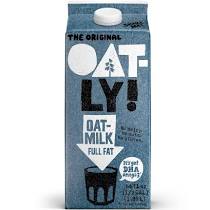
Oatly, a Swedish milk company whose product is made primarily from oats, has been in the news lately. You may recall its fun, albeit somewhat odd, Super Bowl spot in which the CEO is singing about the brand in a field of oats. Two weeks ago, Oatly had a public stock offering on the Nasdaq, with a nice little first day bump.  And not long before that they made a neat hire in Heidi Hackemer as EVP creative director.  Should be an interesting company to watch.

But one thing I can’t wrap my head around is their tagline. “It’s like milk but made for humans.”  Milk has for millennia been the life-blood of humans. Read mother’s milk. So the statement is intuitive wrong.  Whether they are talking about milk allergies or global warming, I’m not completely sure. Probably both, but either way they are trying to deposition accepted and current forms of milk and other mild substitutes.

Moreover, to position your product “for humans,” or in other words everybody, though perhaps  a smart massification of consumers, it is not very special. Air is for everybody.  Water is for everybody. People don’t select brands because they are for everybody, they select brand because they are for “me.”

I think I know the play here but it just seems a little weak. I predict the sing-songy line will be around a few more months, maybe a year, then put to pasture.

Peace.


Networking.

0

Mike Troiano, a former colleague of mine, has a podcast on Racket and while listening yesterday he floored me with some sage advice “Network but don’t be dick.” Love this guy.

The ulterior motive of networking is to increase your sphere of contacts in the hope of making more money. Sure, we network to learn from others. We network to share with others. We mine new ideas, resources and business insights and a bit of humor is always nice. But the ultimate end-result of networking is the betterment of oneself.  

I’m not sure who said it, perhaps it was a Native American, but we have two ears and one mouth for a reason. If you want to network and not be a dick, listening is important. It helps you when you do open your mouth, to know what others are interested in. It lets you riff on their interests. And it is okay to veer, but don’t go all me, me, me on your cohort. Tell stories that make you more human and be careful not to brag; that’s dickish. And don’t be self-aggrandizing.   

There’s a term in the telecommunication business “full duplex.” It means two people can talk and be heard at the same time. (It doesn’t work on mobile phones.) Network in full duplex mode, with ears wide open. And try to give away more than you get, while not being pedantic.

Peace.


Thoughts on Brand Claims and Taglines.

0

One of the things I learned as a young-un working at ad agencies was that it was poor form for an account person (project manager/business manager) to offer up creative ideas to creatives. Agencies, have evolved to be somewhat more inclusive these days, but I’m sure it’s still a thing. Anyway, at my brand strategy practice, whenever I present a brand claim to a client, I go out of my way to explain the claim is not a tagline or a piece of creative. It’s just the main, operative strategy statement.

Yesterday, while hiking, I was thinking about some of my past brand strategy claims – claim being only one quarter of the brand strategy — proofs planks being the other three quarters.  And while looking for snakes and cogitating over past claims I realized something:  The claim is very much the brand strategy while the tagline or creative is the result (or output) of the claim.

For instance, North Shore-LIJ Health System’s (now Northwell Health) claim was “A systematized approach to improving health.” The result of that claim or tagline was “Setting New Standards in Health Care.”  For web startup Zude, the claim was “The fastest, easiest was to build a website.”  The results was tagline “Feel Free.”

The creative people (Fergus O’Daly, Pat Peduto, etc.) have been right all along. Taking something prosaic and delivering it with humanity and emotion is the smartest approach.  That said, campaigns (and taglines) come and go, a powerful brand idea is indelible.

Peace.

Brand Flotsam.

0

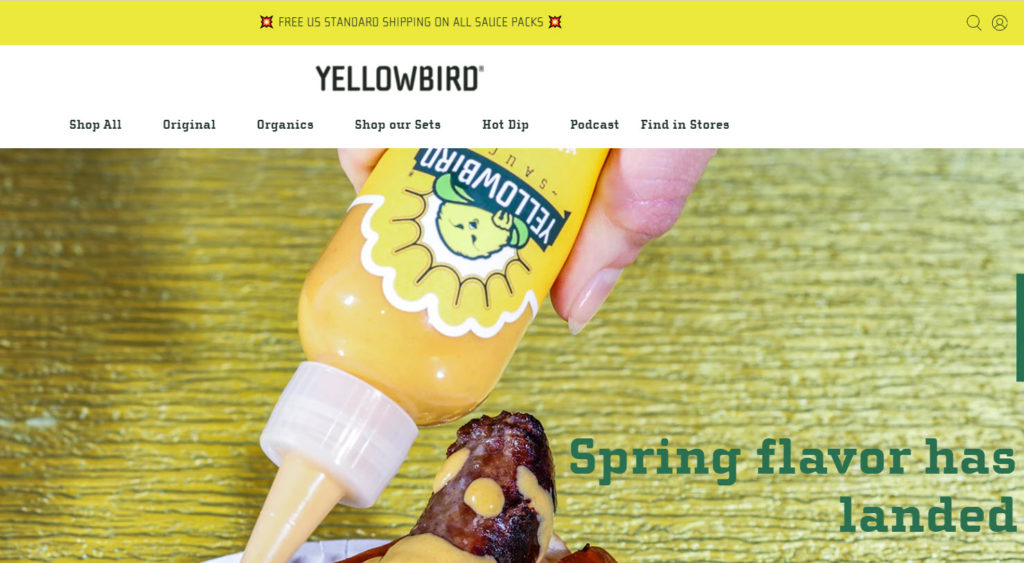
I came across what looks to be a cool hot sauce company in Austin, TX by the name of Yellowbird.  Nice memorable name. Playful and fun logo. The website that is bold and visual.  I even dug deeply into the site and found in the About Section, a suggestion that birds aren’t bothered by the heat of hot peppers — a tie to the brand name.

Yellowbird, I also noticed, was looking for a director of marketing.

Following are 15 things they are seeking in a candidate:

  • Be the voice and advocate of the customer within the organization
  • Work with Leadership to ideate and create quarterly and annual marketing initiatives and budgets and ensure tip-to-tail execution
  • Leverage data to plan, optimize, and report on marketing efforts
  • Help create the brand story in the world and evolve the brand and voice over time
  • Grow market share and overall brand awareness
  • Plan and manage field marketing, sampling, and event activities on a national scale using internal and external resources
  • Coordinate with sales team on shopper marketing initiatives and activities
  • Work with multiple internal stakeholders including but not limited to creative, finance, innovation and others to coordinate projects, develop messaging and produce marketing materials for various communications and events
  • Utilize best practices to own or assist with project management, marketing team planning, reporting, operations, budget, and contracts
  • Communicate regularly and clearly with Yellowbird team members to maintain consistent forward momentum
  • Use company tools and systems to store files, manage vendor relationships, stay on top of communication, and manage projects and timelines
  • Ensure that all marketing and communication processes are continuously evaluated for proper operation, relevance, efficiency and utilization
  • Continually assess and introduce process improvement measures.
  • Lead, manage, and develop your team to deliver exceptional results
  • Manage cohesive working relationships with all other personnel and stakeholders to ensure unified and effective promotional efforts

All of these functions are important. Cut and paste important. But they are also very much tactical. I’d be hard pressed to see any strategic focus here. And that was also reflected in Yellowbird’s “nice” website. Lots of words, lots of product flotsam, little strategy.

What gets people ordering hot sauce online or out of their chairs and to a retailer is strategy. Strategy with a poetic, memorable, replicable flair.

Yellowbird has a good first step (name, package, website) but it hasn’t begun yet to do the real work of brandcraft. 

Peace.


Rebranding. And Brand Planks.

0

I did a brand strategy for a cyber security company a number of years ago. It was a killer assignment and a killer company. A couple of years later the CEO re-approached me and asked if I would do a refresh.  The company had moved into a couple of new areas and he wanted to check to see if his claim and proof planks were still dead on.  The new business areas were crypto, block chain and osquery.

My approach to brand strategy has always been one in which the work is supposed to be future- proof, if not future enabling. But sometimes when the product, target or technology change a look-see is required.

When the reassessment brand work was complete I was happy to report that the 3 brand planks stayed the same.  The claim, however, evolved a bit yet it was certainly only an evolution. An evolution that allowed the company to take more responsibility for understanding the nuanced science of cyber security.

The learning for me was that even if a strategy claim changes, it’s less likely the planks will change. Planks are more like DNA. Leopards don’t really change their spots.

Brand planks are critical because they feed the teaching narrative that build indelible value. Many brand strategy consultants sell you a claim and some gobbledygook about voice or personality. Unless you are getting planks you’re being short-changed.

Peace.